NVIDIA Added CUDA Tile for GPU Kernel Optimization in C++
NVIDIA integrated CUDA Tile into its GPU programming toolkit. The new technique allows developers to write optimized GPU kernels in C++ using a tile-oriented approach without rewriting existing code.
AI-processed from NVIDIA Developer Blog; edited by Hamidun News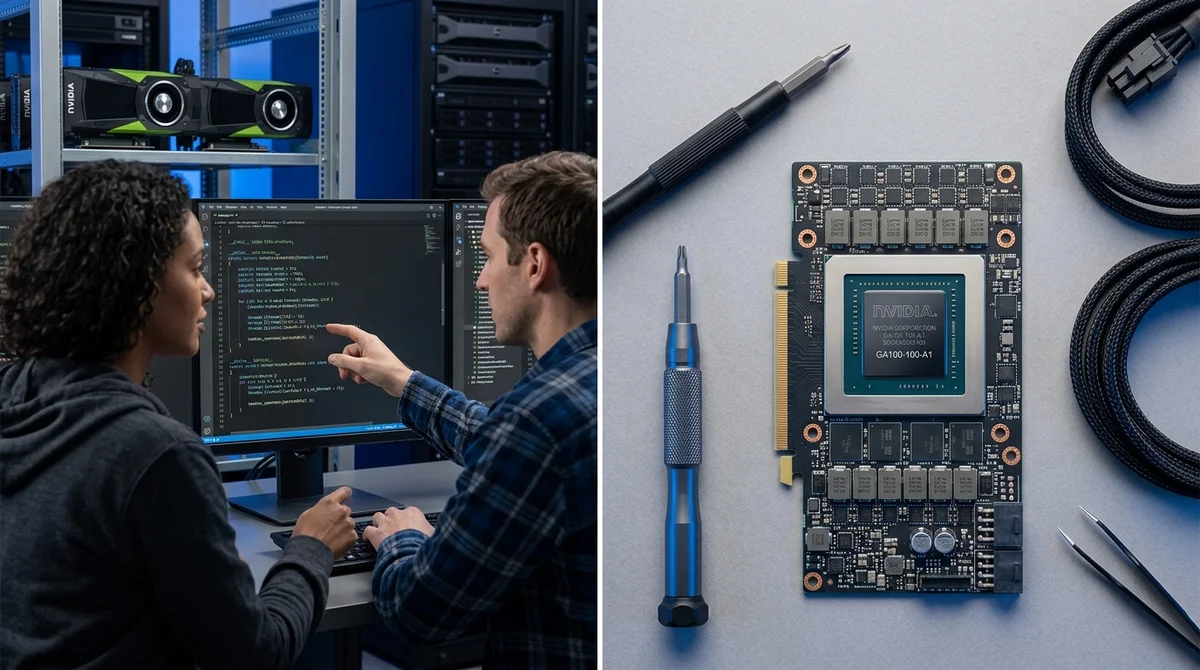
NVIDIA has introduced CUDA Tile — a C++ standard extension that lets developers build high-performance GPU kernels based on tile-oriented (block-based) programming and embed this optimization directly into existing C++ codebases without a full rewrite. According to the NVIDIA Developer Blog, the technology is aimed primarily at large projects where existing GPU code needs to be accelerated rather than rewritten from scratch.
What is CUDA Tile
CUDA Tile is a C++ extension that changes the very unit of work with GPU memory: instead of processing data element by element, the program operates on blocks, or tiles. The developer describes how small chunks of data should be processed simultaneously, and the NVIDIA CUDA compiler automatically translates this description into optimal low-level instructions for the GPU. A key feature of the approach is that it integrates into existing C++ code: the technology can be used inside large active codebases, not only in new projects designed for GPUs from scratch. This is what sets CUDA Tile apart from classic manual CUDA kernel optimization methods, which usually require rewriting a significant portion of the code.
Why the tile-oriented approach boosts performance
The tile memory model is critical for performance for several reasons. First, it reduces the number of accesses to the GPU's global memory — the slowest memory tier on the graphics card. Second, the approach makes better use of the GPU's local cache hierarchies, since data is processed in blocks that fit more efficiently into fast cache memory. Third, more efficient data access lowers the computation's power consumption. Finally, tile-based code scales across different hardware without rewriting — the same program, described through tiles, can run efficiently on different generations of graphics cards without manual adaptation to a specific architecture.
Where it's used and what it means for developers
CUDA Tile is especially useful for matrix operations — the basic computational unit of machine learning, image processing, and scientific computing. Instead of writing hundreds of lines of manual optimization, the developer simply describes the tile structure, and the compiler unfolds this description into fast GPU code on its own. The approach fits the logic NVIDIA has been promoting for several years now: "This lets developers focus on the algorithm rather than the low-level details of GPU hardware."
The practical effect is a lower barrier to entry for GPU optimization: teams will be able to embed high-performance GPU kernels into large C++ projects without bringing in narrowly specialized GPU programmers, which should speed up development of applications in AI, simulations, and big data analysis.
What is CUDA Tile?
CUDA Tile is NVIDIA's extension of the C++ standard that lets developers work with GPU memory in blocks (tiles) rather than element by element. The developer describes how small chunks of data should be processed simultaneously, and the NVIDIA CUDA compiler compiles this into optimal instructions for the graphics card. The technology can be embedded into existing large C++ codebases without a full rewrite.
Why did NVIDIA need a tile-oriented approach?
The tile-based approach to GPU memory reduces the number of accesses to the graphics card's slow global memory, makes better use of the GPU's local cache hierarchies, lowers power consumption through more efficient data access, and lets the same code scale across different hardware without rewriting.
Who will CUDA Tile help, and how?
Above all, developers working with matrix operations — in machine learning, image processing, and scientific computing. Instead of manually optimizing code, they will be able to describe the tile structure, and the compiler will unfold it into fast GPU code on its own. This lowers the barrier to GPU optimization and, according to NVIDIA, allows high-performance GPU kernels to be embedded into large C++ projects without bringing in narrowly specialized GPU programmers, speeding up the development of applications in AI, simulations, and big data analysis.
Need AI working inside your business — not just in your newsfeed?
I build production AI for companies — custom CRM, internal tools, autonomous agents, workflow automation. Owned by you, shaped to your process, no per-seat tax. Built by Zhemal Khamidun, CPO of AlpinaGPT (AI platform, 6,000+ users).
The AI world, distilled — once a week
Seven stories that actually mattered, hand-picked. No noise, no reposts, no press releases.
Done! Check your inbox for a confirmation.