NVIDIA explained how to manage autonomous agents in enterprise AI factories
AI agents have long since moved beyond chat: they review code, run tests, read enterprise documents, and work for hours on behalf of an employee. This opens access to sensitive data and systems — which means clear governance rules are needed. NVIDIA explained how to build a secure, manageable environment for agents in enterprise AI factories.
AI-processed from NVIDIA Developer Blog; edited by Hamidun News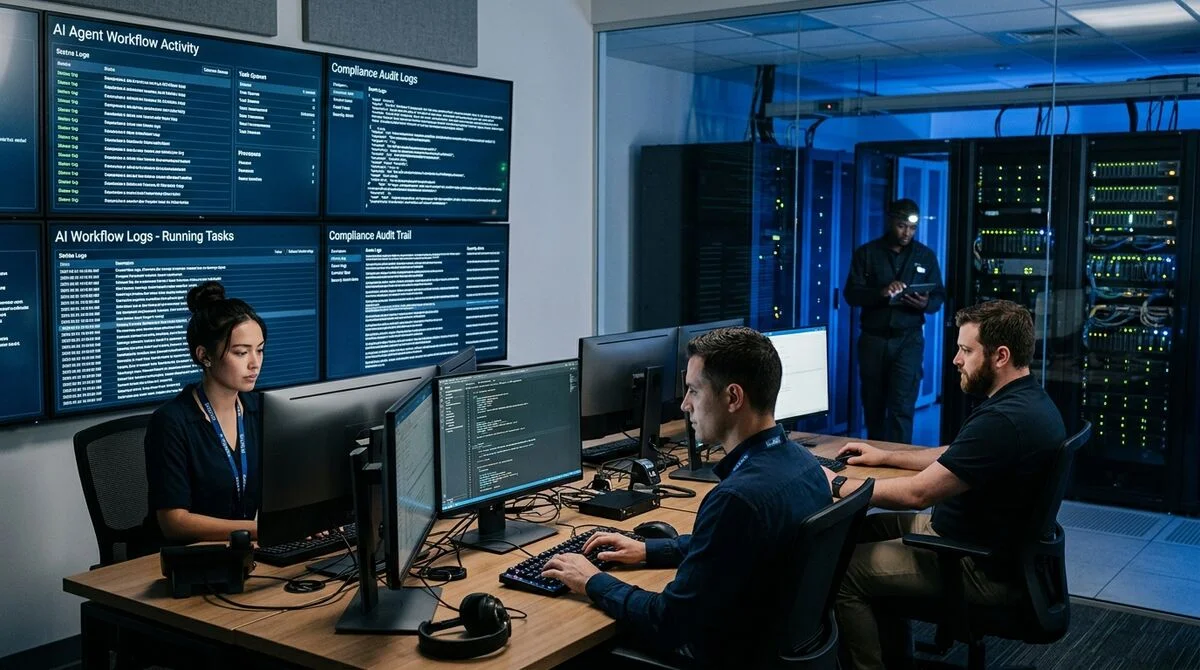
AI agents have stopped being just chatbots. They check code, run tests, read documents, navigate knowledge bases, access internal systems, and can work for hours on behalf of an employee — which means corporate security must evolve alongside them.
An
Agent Is More Than Just a Request Modern AI agents don't execute a single request—they perform an entire chain of actions: reading a document, finding the right database, formulating output, running a script—all without continuous human involvement. This mode of operation significantly increases productivity, but it also expands the surface area of potential threats. An agent can gain access to sensitive corporate data: source code, financial reports, personal customer information.
And it acts on behalf of a specific user—meaning its actions must be limited to that user's permissions, not the full spectrum of access available in the system. Today most companies don't provide this assurance. A separate problem is duration.
If a normal request takes seconds, an agent might execute a task for several hours. During that time, conditions can change, new data can emerge, or faulty logical branches can develop. Oversight is needed not just at the start, but throughout—up to the ability to stop the agent in an emergency.
Five
Principles of Secure Deployment NVIDIA identifies several key levels where agent management must operate in a corporate environment: Identity and authentication — each agent must have a verifiable identifier to precisely establish who performed which action Least privilege — the agent gets access only to resources necessary for the current task Audit and tracing — all actions are logged in a format convenient for review and reproduction Data isolation — agents don't mix information from different projects, users, or security boundaries * Real-time control — there must be a technical capability to stop the agent if unwanted actions occur Without these principles, even the most productive agent becomes an uncontrolled source of risk. Regulators in the financial and medical sectors are already asking not about agent capabilities, but whether they can be audited and whether someone can be held accountable for their decisions.
AI
Factory Architecture In NVIDIA's interpretation, an "AI Factory" is infrastructure where agents aren't just running, but are embedded in a managed chain: from task receipt to verified result. This isn't just a set of tools—it's a process model with clear division of responsibility. An orchestrator determines which agent performs which step. Each agent operates in its own isolated environment with limited permissions. Results of each step are verified before being passed to the next stage. The entire process is logged and can be reproduced for auditing or incident investigation.
"Agents need more than just infrastructure to run—they need an environment where their actions can be understood, verified, and if necessary, rolled back."
This approach is especially critical for financial and medical companies, as well as legal services. But even in less regulated sectors, a data breach incident through an autonomous agent can cost more than everything saved by building secure infrastructure.
What
This Means Enterprises deploying AI agents will need to think not just about their efficiency, but about manageability. Tools, roles, logs, access policies—all of this becomes a mandatory part of agent architecture. Companies that build such infrastructure now will gain significant advantages when scaling and avoid painful incidents at early stages.
Need AI working inside your business — not just in your newsfeed?
I build production AI for companies — custom CRM, internal tools, autonomous agents, workflow automation. Owned by you, shaped to your process, no per-seat tax. Built by Zhemal Khamidun, CPO of AlpinaGPT (AI platform, 6,000+ users).
The AI world, distilled — once a week
Seven stories that actually mattered, hand-picked. No noise, no reposts, no press releases.
Done! Check your inbox for a confirmation.