MIT Technology Review: Why calling AI agents “colleagues” is a mistake
Companies give AI agents names — “Alex,” “Maya” — and present them to employees as “colleagues.” MIT Technology Review warns that this creates false expectations. People begin to attribute human qualities to AI — responsibility, judgment, empathy — that these systems do not have. In medicine, law, and finance, this is no longer a theoretical problem.
AI-processed from MIT Technology Review; edited by Hamidun News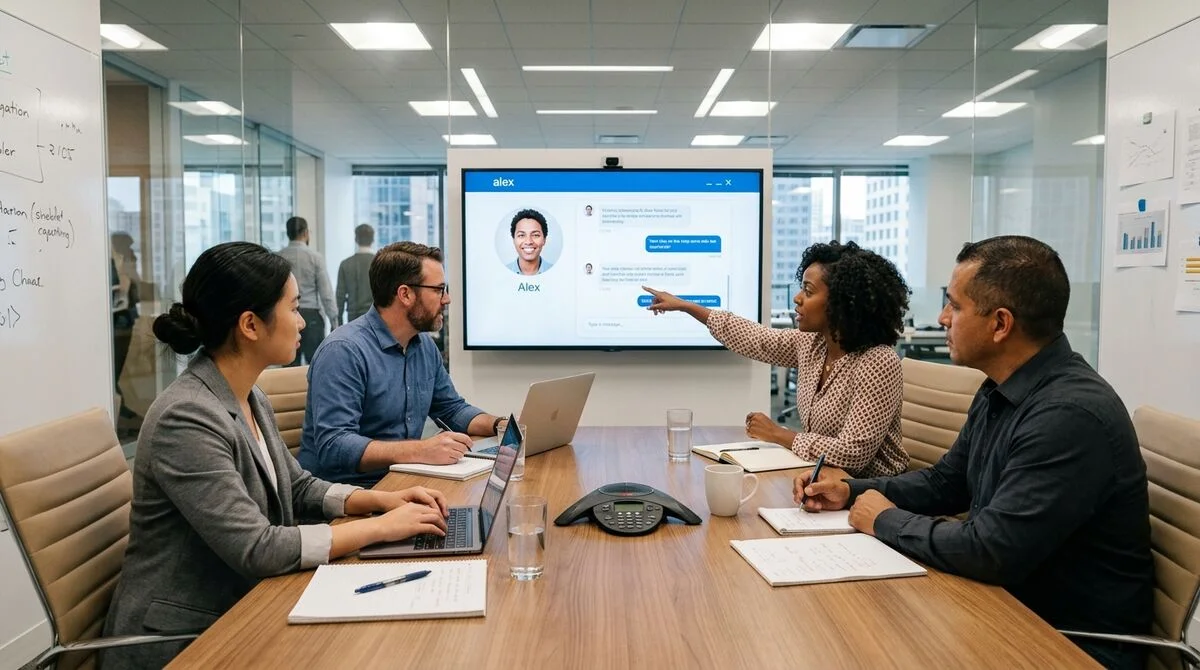
MIT Technology Review: Why Calling AI Agents 'Colleagues' Is a Mistake
Large companies have started giving AI agents names — "Alex," "Maya," "Sam" — and presenting them to employees as "new colleagues." MIT Technology Review breaks down why this approach changes people's attitudes toward tools — and not always for the better.
How It Looks in Reality
Imagine: you come to work and learn that you have a new subordinate named Alex. Alex is not a human — it's an AI tool for your company. But management intentionally presents it this way: "a new team member," "your digital assistant," "a colleague you can assign tasks to."
This scenario has stopped being science fiction. Large corporations worldwide have taken a course toward anthropomorphizing AI tools: research shows that employees accept change much more easily if the system has a name and at least a semblance of personality. "Automation system v2.
3" triggers anxiety and a feeling of replacement. "Alex" seems familiar and neutral. The phenomenon has already gained its own terminology in the corporate environment: "agents" — this is exactly how companies like Microsoft, Salesforce, and dozens of others refer to their AI systems, deliberately choosing a term that emphasizes autonomy.
The next step — names. After names — "workplaces" and "roles."
The Problem with Expectations
Names don't come alone — they come with assumptions. When an employee hears the word "colleague," they automatically project human qualities onto the AI:
- responsibility for results and their consequences
- ability to explain its behavior in human terms
- empathy toward those affected by its decisions
- ability to handle ambiguous situations
- moral judgment in conflicting cases
But an AI agent does not possess these qualities in the sense we expect them from a human. It can give plausible answers and simulate understanding — but it bears no responsibility for consequences, does not understand context at the level of social norms, and is incapable of true moral judgment. When something goes wrong, there's no one to hold accountable: the AI is not subject to disciplinary responsibility.
Marketing as a Management Tool
MIT Technology Review emphasizes: when a company assigns an AI agent a human name and calls it a "colleague," this is not a technical characteristic — it's a management decision. The goal is to reduce resistance during implementation, decrease fear of automation, and make technology less threatening. In the short term, it works perfectly. But the long-term consequences raise questions.
Employees who perceive AI as a full partner begin to delegate judgment to it in situations where this is dangerous. This is particularly pronounced in high-stakes areas: medicine, law, financial advice. An AI error here is no longer a technical failure, but the result of misunderstanding the nature of the tool.
"Imagine coming in to work to learn that a new underling will report to you.
The worker is not a person but an AI tool" — MIT Technology Review sees the essence of the problem in this very paradox.
What This Means
The trend toward anthropomorphizing AI agents will continue to intensify: companies have found in it an effective tool for managing change. For employees themselves, it is important to maintain clarity: a name and "personality" do not change the nature of the system. "Alex" is an AI with specific capabilities and specific limitations, not a colleague with judgment and responsibility. This understanding is not skepticism toward technology, but professional competence in the age of AI.
Need AI working inside your business — not just in your newsfeed?
I build production AI for companies — custom CRM, internal tools, autonomous agents, workflow automation. Owned by you, shaped to your process, no per-seat tax. Built by Zhemal Khamidun, CPO of AlpinaGPT (AI platform, 6,000+ users).
The AI world, distilled — once a week
Seven stories that actually mattered, hand-picked. No noise, no reposts, no press releases.
Done! Check your inbox for a confirmation.