Zuckerberg admits to Meta staff: AI-agent progress lags behind plan
On July 3, 2026, Mark Zuckerberg told Meta employees that the company's agentic AI development is progressing slower than he anticipated. 'The trajectory of agentic development over the past four months has not accelerated as we expected,' the CEO stated. This admission came exactly four months after a major internal restructuring that was supposed to accelerate work on Meta's AI agents. *Meta is recognized as an extremist organization and banned in the Russian Federation.
AI-processed from TNW; edited by Hamidun News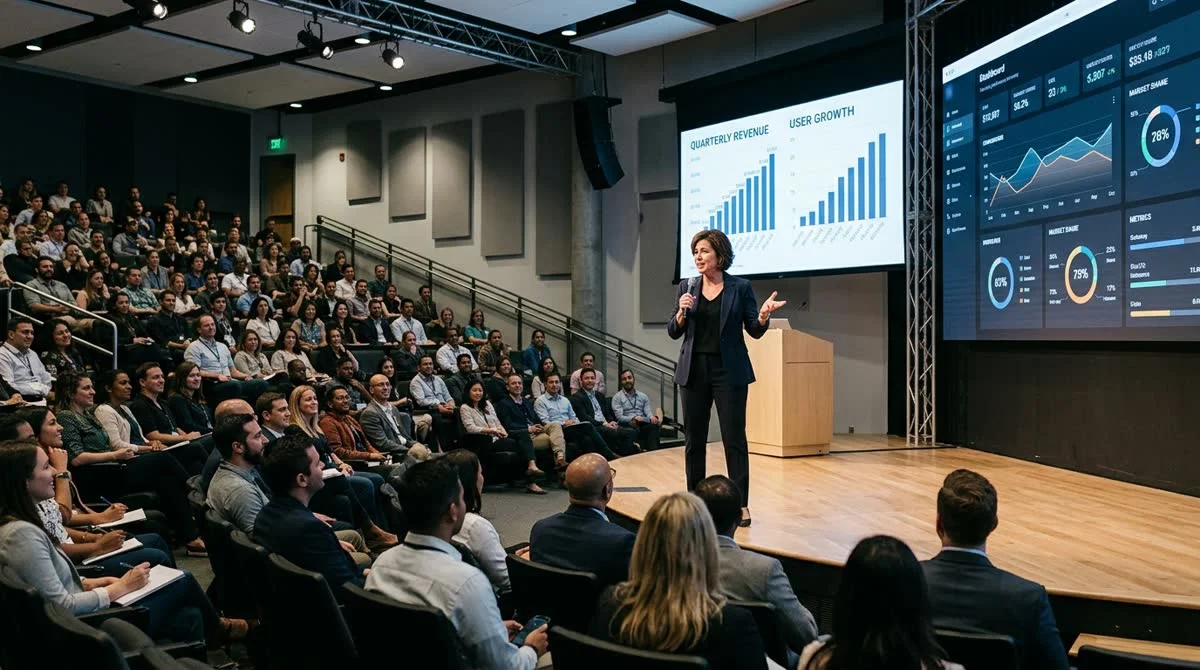
Mark Zuckerberg told Meta employees on July 3, 2026 that the company's progress in developing AI agents has been slower than he expected—four months after a restructuring specifically designed to accelerate work in this direction.
What exactly did Zuckerberg acknowledge?
At an internal meeting with the team, Meta's CEO openly recorded the lag behind his own expectations.
"The trajectory of agent development over the last four months has not accelerated the way we calculated,"
Zuckerberg told employees.
Key facts:
- Meeting—July 3, 2026, Meta team internal gathering
- Period without expected acceleration—four months
- Restructuring conducted approximately in March 2026
- Zuckerberg communicated this personally and directly before employees
The phrasing is notable for its directness: the CEO does not appeal to external circumstances and does not shift responsibility—he fixes the gap between what he personally expected and what the engineering team achieved. For the leader of a company with a valuation exceeding a trillion dollars, such a tone at an internal meeting is a rarity.
Meta has actively positioned AI agents as a central strategic priority over the past year and a half. Zuckerberg publicly stated that agents are capable of taking on some of the tasks that living employees currently perform. An internal acknowledgment of the slowdown means that these plans are being realized more slowly than anticipated.
Why didn't restructuring deliver the expected acceleration?
Approximately in March 2026—four months before the current meeting—Meta conducted an internal reorganization with a clear goal: to accelerate agent development. As part of the restructuring, teams and resources were redistributed, priorities changed. It was this restructuring that Zuckerberg linked to his calculations on a breakthrough in the agent direction.
Four months later, the CEO is forced to state: the expected acceleration did not occur. This is not an isolated case—the transition from generative language models to agents operating under real conditions turns out to be more complex than most technology companies anticipated.
The difference is fundamental. Chat models respond to one request and complete their work. An agent must independently plan a chain of actions, use external tools, recover from errors, and do all of this stably—not in a demonstration scenario, but under real, unpredictable conditions. This very "reliability at scale" remains the key engineering barrier for the entire industry.
What this means for Meta, investors, and competitors
Zuckerberg's open acknowledgment is an important signal to several audiences at once. For Meta employees, it means a reassessment of time expectations while maintaining direction: work on agents continues, but the horizon shifts. For investors—evidence that even a company with tens of billions of investments in AI infrastructure cannot bypass technical limitations through a single management decision. For competitors—an indirect reference point: if Meta, with its team and resources, is lagging behind the plan, this is a systemic, not a private problem.
It is also noteworthy that Zuckerberg reported this openly. Most AI laboratory leaders avoid such admissions—against the backdrop of competitive race, where every statement is read by the market as a signal of the company's position.
What this means
Zuckerberg's acknowledgment emphasizes a common pattern: the distance between impressive demos and industrially reliable agents turns out to be wider than the optimistic forecasts of 2025 assumed. Meta continues to work in this direction—but with adjusted expectations and, judging by the CEO's tone, with a more realistic view of timelines.
Meta is recognized as an extremist organization and is banned in Russia.
Want to stop reading about AI and start using it?
AI News is a curated feed of AI/tech news. Hamidun Academy teaches you to use AI systematically in your work.
The AI world, distilled — once a week
Seven stories that actually mattered, hand-picked. No noise, no reposts, no press releases.
Done! Check your inbox for a confirmation.