Oil service workers' salaries break records for third consecutive month due to Iran war
Oil service workers' salaries set a third consecutive record in May 2026. The war with Iran raised oil prices, forcing extraction companies to expand their drilling programs, which increased demand for specialists—drilling rig operators and well engineering technicians who cannot be quickly trained. Record salaries have been consistently registered since March 2026.
AI-processed from Bloomberg Tech; edited by Hamidun News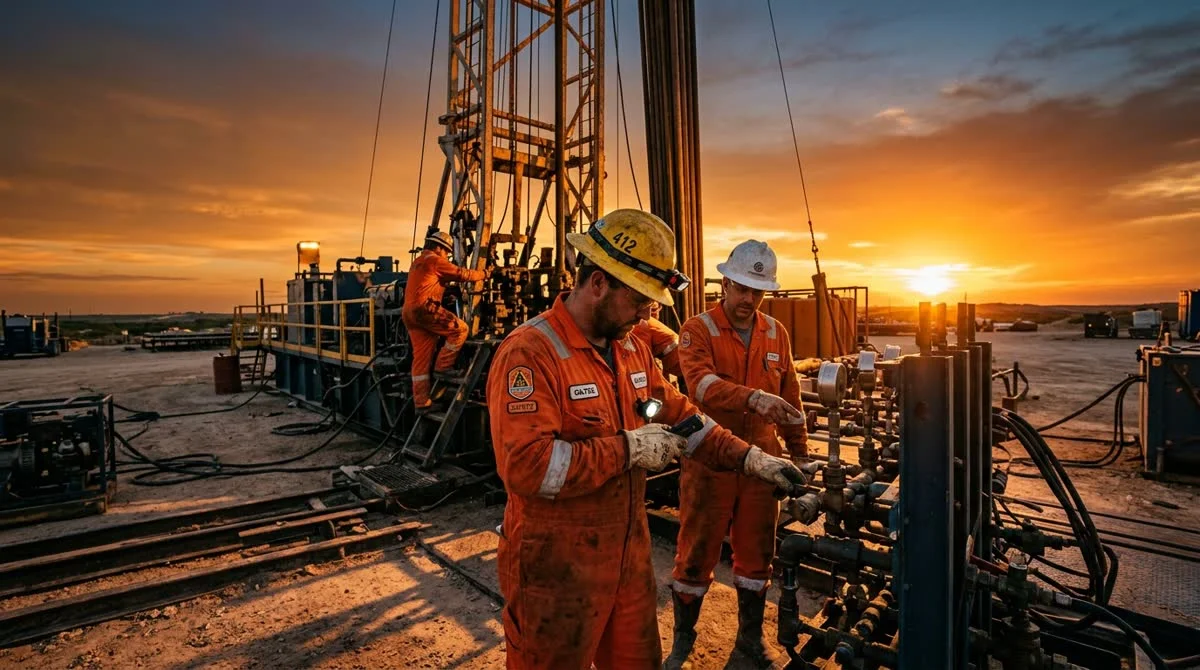
Oil Services Workers' Salaries Set Record for Third Consecutive Month Due to War With Iran
Salaries of oil services company employees in May 2026 set a new record — for the third month in a row: war with Iran raised oil quotes, extracting companies accelerated drilling programs, and subsequently demand for specialists increased.
What Happened to Salaries?
Labor compensation in oil services has grown continuously since March 2026, each month recording a historical maximum. According to Bloomberg data published on July 2, 2026, May figures became the third record in a row — a sign of persistent staff shortage in the industry.
The picture is explained by a chain reaction. War with Iran drove up oil quotes: any risk of supply disruptions from one of the world's largest oil producing countries is immediately reflected in price increases. In response, extracting companies launched new drilling programs and went to the contract labor market.
Why Oil Services Reacts So Quickly
The labor market in oil services is one of the most sensitive to market conditions. When an oil company decides to expand drilling, it does not wait months for approvals: subcontractors and service companies immediately start poaching specialists, offering bonuses. It is precisely the competition for ready-made workers that drives rates up in a matter of weeks.
Key specialties in shortage — drilling rig operators, well technology engineers, technical personnel for well completion. Training such specialists takes months, and the market does not manage to fill in response to sharp demand growth. Companies close this gap with rate increases — which is why records are being set for the third month in a row.
Iranian Conflict as Main Catalyst
War with Iran has become the most powerful geopolitical trigger for oil prices in 2026. Iran is among the world's largest oil exporters; threat of supply disruptions through key sea routes is immediately reflected in quotes. Extracting companies perceived the price increase as a signal to act. High quotes make profitable those wells that at low prices would not break even — and companies launch projects deferred during periods of cheap oil.
The mechanism "geopolitics → price rise → new drilling programs → staff shortage → wage growth" is now working at full capacity. The oil services industry traditionally serves as a leading indicator of activity in oil extraction: volume of drilling work, fleet load for hydraulic fracturing, and wage levels reflect market conditions in real time.
What This Means
Three consecutive salary records signal overheating of labor demand in oil services. If the conflict with Iran continues and oil prices remain high, companies will maintain high drilling activity, and specialist rates will continue to rise. This is a positive signal for the revenue of major oil services players and a stark reminder that geopolitical conflicts have concrete price tags on the labor market.
Need AI working inside your business — not just in your newsfeed?
I build production AI for companies — custom CRM, internal tools, autonomous agents, workflow automation. Owned by you, shaped to your process, no per-seat tax. Built by Zhemal Khamidun, CPO of AlpinaGPT (AI platform, 6,000+ users).
The AI world, distilled — once a week
Seven stories that actually mattered, hand-picked. No noise, no reposts, no press releases.
Done! Check your inbox for a confirmation.