Product war in South Africa: Retailers shift from search to AI-powered customer dialogue
South Africa's online product market is transitioning to a new model: players are no longer competing on delivery speed but on who can make shopping most seamless through AI. Instead of browsing the catalog — a dialogue: 'Refill my regular list' — and the order is ready in seconds. The winner is whoever's language model knows the specific customer best.
AI-processed from Bloomberg Tech; edited by Hamidun News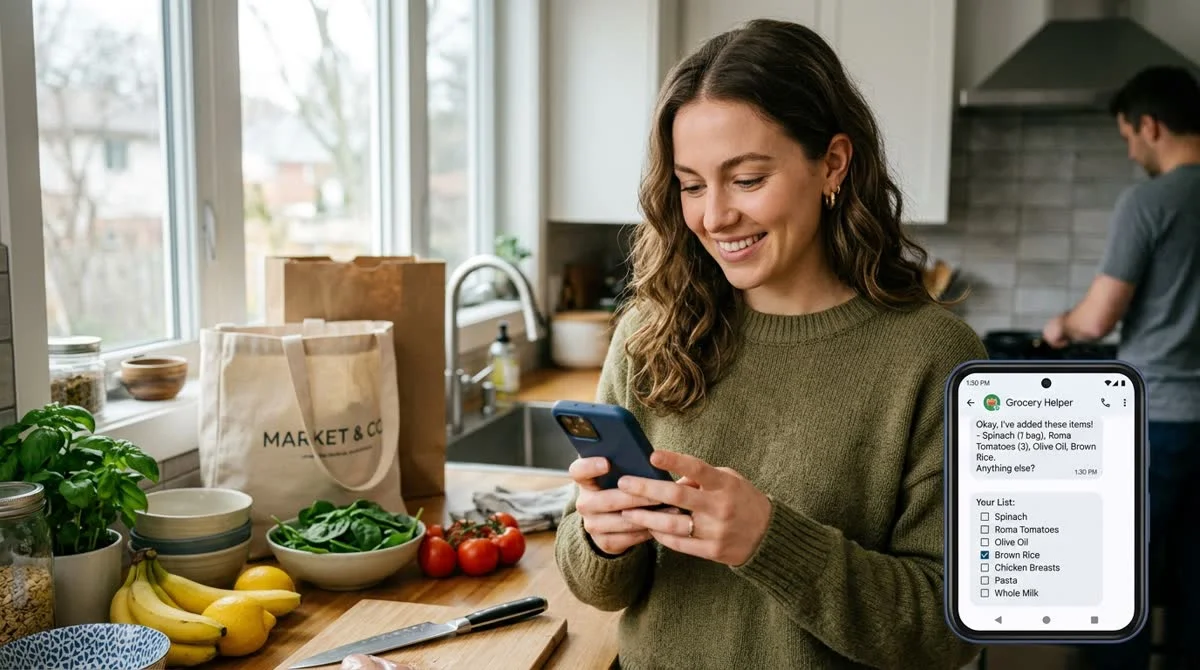
Competition in online grocery retail in South Africa is entering a new phase: players are no longer competing on delivery speed, but on the quality of AI dialogue that makes the shopping process itself almost invisible to the user. Delivery speed has stopped being a differentiator — leading players have already mastered it, and now the winner is whoever's AI better guesses what needs to be bought before the buyer even thinks about it themselves.
What is changing in product competition
A traditional online supermarket requires constant effort from the buyer: typing a query into the search bar, scrolling through dozens of items, comparing prices, adding the right one to the cart. The new model offers a fundamentally different scenario: an AI assistant carries on a dialogue, remembers preferences and purchase history, and forms an order in a few chat phrases — without a single search query. It is precisely this shift from a search interface to a conversational one that will become the main line of competitive battle: searching for "milk" gives way to the command "restock my usual list, just swap the milk for lactose-free."
Why South Africa became a testing ground for AI shopping
The shift fits into the global trend of ambient commerce — "background purchases," where buying goods is built into everyday scenarios: a voice assistant in the car, a chatbot in a messenger, automatic restocking on a schedule. For the grocery segment, this transition is especially natural: groceries are bought regularly, patterns are stable, and AI predicts them well. South Africa is a convenient market for such experiments: high mobile internet penetration, active messenger use, a growing urban middle class seeking to save time. Instead of half an hour of scrolling through an app, the buyer types in chat: "Order the standard weekly set" — and the AI handles it in seconds, without a single click through the catalog.
The regularity of grocery purchases — once a week or more often — means AI quickly builds up a rich user profile: after just ten orders, the assistant already knows that the buyer prefers organic eggs, doesn't buy beef, and always chooses one brand of coffee. For retailers, this changes the key competitive asset: previously they relied on warehouses near residential neighborhoods, well-tuned last-mile logistics, and a broad assortment; now a fourth dimension is added — accumulated data about the buyer and the quality of the language model that can put that data to use.
Where the risks of the new approach are hidden
Conversational interfaces form a new kind of loyalty — and, at the same time, a new kind of dependency. If an AI assistant is trained on a specific user's purchase history, switching to a competitor becomes harder: accumulated habits and preferences stay with one provider. This is a structural lock-in that classic search catalogs practically don't have.
However, AI can make mistakes: recommending unsuitable substitutes, failing to account for allergens, missing promotions, or offering an outdated assortment. This creates reputational risks of a qualitatively different scale — the buyer entrusts the assistant with their time, health, and budget. Trust in an AI assistant is a new competitive resource that can easily be lost after a single failed order.
What this means
The South African grocery war has moved to a new level: the winner won't be whoever delivers faster, but whoever's AI better understands the specific buyer and makes shopping truly seamless.
What decides the outcome of competition in online grocery retail?
Not delivery speed — leading players have already mastered that — but the quality of AI dialogue: the winner is whoever's assistant better guesses what the buyer needs to buy, before the buyer even thinks of it themselves.
Why did
South Africa become a testing ground for AI shopping?
Because of the combination of high mobile internet penetration, active messenger use, and a growing urban middle class seeking to save time — while the regularity of grocery purchases lets AI quickly build up a user profile.
What is the risk of conversational AI assistants for the buyer?
An AI assistant trained on a specific user's purchase history creates lock-in — switching to a competitor becomes harder — but AI can make mistakes: recommending unsuitable substitutes, failing to account for allergens, missing promotions, or offering an outdated assortment, which creates reputational risks for the service.
Need AI working inside your business — not just in your newsfeed?
I build production AI for companies — custom CRM, internal tools, autonomous agents, workflow automation. Owned by you, shaped to your process, no per-seat tax. Built by Zhemal Khamidun, CPO of AlpinaGPT (AI platform, 6,000+ users).
The AI world, distilled — once a week
Seven stories that actually mattered, hand-picked. No noise, no reposts, no press releases.
Done! Check your inbox for a confirmation.