Russia is developing a forced-landing mechanism for civilian UAVs — a “red button” by 2026
Russia is creating a “red button” for the forced landing of civilian drones. In 2026, the plan is to ensure the technological readiness of a system that will inform UAV operators about the forced termination of a flight. A full launch depends on the creation of a regulatory framework — it is necessary to determine who has the right to stop a drone and under what conditions.
AI-processed from CNews AI; edited by Hamidun News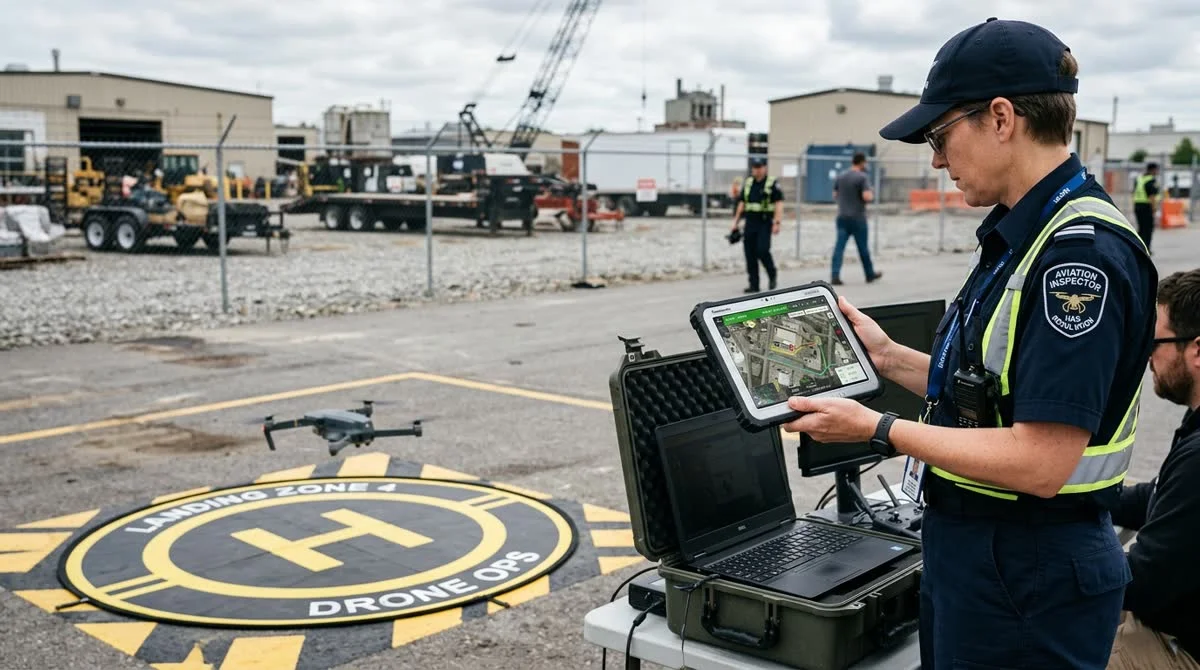
Russia intends to create a mechanism for forced landing of civilian unmanned aerial vehicles (UAVs). Technological readiness of the operator notification system will be ensured by 2026; full launch of the "red button" will occur after completion of the necessary regulatory framework.
How Does Forced Landing of a Drone Work?
The mechanism is designed to forcibly stop a civilian UAV's flight while simultaneously notifying its operator. A key detail: the system does not simply "jam" the drone, but informs the pilot of exactly what happened — with an explanation of the reason. Technologically, such systems combine several layers:
- Radio-electronic suppression — jamming the control signal or satellite navigation (GPS/GLONASS)
- Interception of control signal — seizing control of the UAV and forcing a landing at a designated point
- Geofencing — automatic prohibition of flight in a specific zone, built into the drone's firmware
- Alert system — instant notification of the operator via mobile application or ground control station
In 2026, the plan is to create precisely the technological foundation: communication infrastructure and software for notifying UAV operators. This is the first technical stage — to ensure the infrastructure works before establishing the legal framework for its application.
Why Is Forced Landing of UAVs Needed Now?
The number of civilian unmanned aircraft in Russia is growing rapidly. Drones are used in agriculture, construction, infrastructure monitoring, film production, and delivery. The actual fleet of aircraft significantly exceeds the number of officially registered ones.
Along with market growth comes a rise in incidents. Unauthorized flights over airports regularly lead to flight delays and temporary closure of airspace. Unmanned aircraft are detected over industrial facilities, restricted institutions, and mass event venues.
Traditional response methods — patrols, radar surveillance, involvement of law enforcement — cannot keep pace with the scale of technology distribution. The "red button" is intended to give authorized bodies a tool for rapid response without the need to physically destroy the unmanned aircraft. At the same time, the regulatory framework is critically important: false triggers or system abuse could harm legitimate commercial operators — financial losses from drone damage, mission failure, legal liability.
Global Context: Where Analogues Already Work?
Russia is not the first to move in this direction. In the United States, the Counter-UAS program authorizes federal agencies to forcibly stop UAVs over critical infrastructure objects. The European Union has required since 2021 that manufacturers embed geofencing in all certified drones — it activates automatically when entering a prohibited zone. The United Kingdom adheres to similar standards through the Civil Aviation Authority (CAA) regulations. A common pattern: technological readiness typically precedes regulatory framework. Systems are built before appropriate laws are enacted. Russia follows the same sequence.
What Does This Mean?
The "red button" for civilian UAVs is an element of large-scale work to establish a management system for low-altitude airspace. For legitimate drone operators, this means stricter requirements for technical compatibility of drones with the state notification infrastructure and, likely, new legal liability for refusal to integrate. Specific timelines depend entirely on the pace of regulatory adoption.
Want to stop reading about AI and start using it?
AI News is a curated feed of AI/tech news. Hamidun Academy teaches you to use AI systematically in your work.
The AI world, distilled — once a week
Seven stories that actually mattered, hand-picked. No noise, no reposts, no press releases.
Done! Check your inbox for a confirmation.