ExpressVPN updates ExpressKeys: password sharing and passkey support
ExpressVPN updated its built-in ExpressKeys password manager. Three key features are now available: secure password sharing without revealing the password itself, passwordless login via the passkey standard, and improved synchronization between smartphone, tablet, and computer. The update is available to all service subscribers immediately.
AI-processed from ZDNet AI; edited by Hamidun News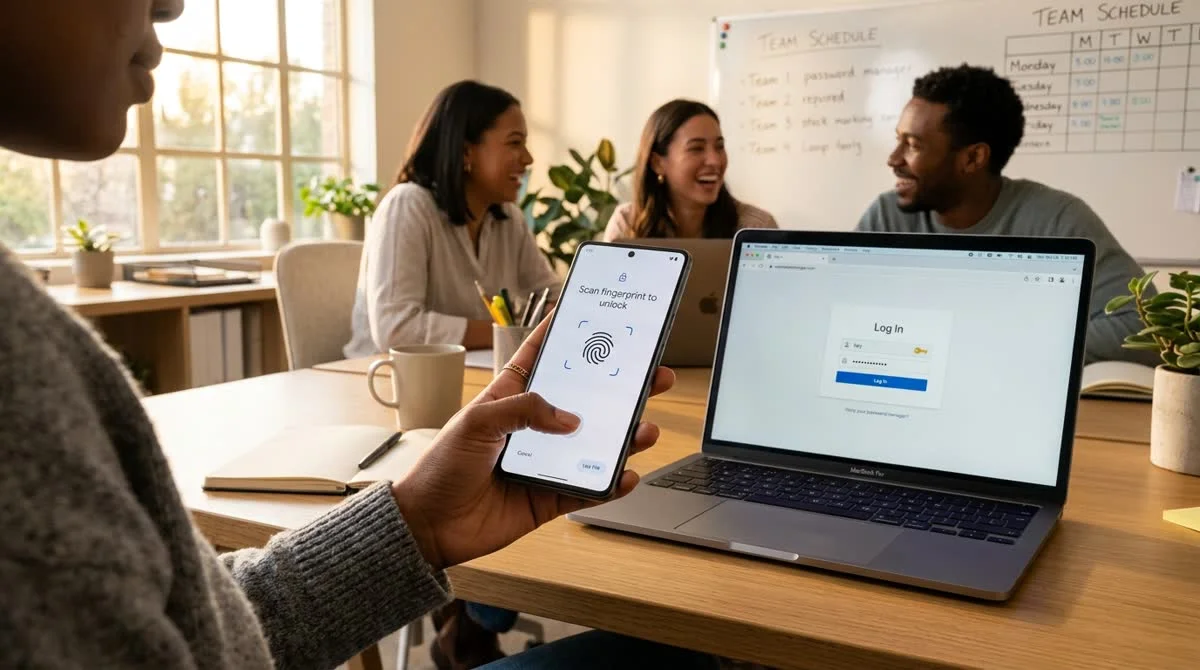
ExpressVPN on July 3, 2026 released an update to its built-in password manager ExpressKeys. The new version received secure credential sharing, passwordless login support via the passkey standard, and improved management across multiple devices. The update is available to all service subscribers at no additional cost.
What ExpressKeys Users Got
The update covers three features that were not previously in the product.
Secure password sharing allows users to transfer credentials to another user through an encrypted channel. The recipient gains access to the website or service without seeing the password in plain text. The feature addresses a common problem: people often send passwords through messengers or email, creating an interception risk.
Passkey support adds passwordless login based on the FIDO2 standard. When registering on a supported site, a pair of cryptographic keys is created: the public key is stored on the server, the private key remains exclusively on the user's device. Even if the database is compromised, an attacker only receives the public key — without the private key, it is impossible to access the account.
Improved cross-device management ensures reliable password and passkey synchronization when working on a smartphone, tablet, and computer simultaneously.
- Secure credential sharing without password disclosure
- Support for passwordless login via FIDO2 standard (passkey)
- Improved synchronization across multiple devices
- Update available immediately to all ExpressVPN subscribers
Why Passkey Matters Right Now
Passkey is supported by Apple (since iOS 16), Google (since Android 9), and Microsoft (since Windows 11). Hundreds of major platforms — GitHub, Amazon, PayPal, Google Workspace, Dropbox — already accept passkey as the primary or alternative login method. The FIDO industry alliance predicts that by 2027, passkey will displace the password as the dominant authentication standard on most consumer services.
For the user, the practical change is: instead of entering a text password, simply confirm login with a fingerprint or Face ID. A password manager with passkey support stores private keys in the same encrypted vault as regular passwords. ExpressKeys now combines both formats in a single interface — this simplifies the gradual transition without needing multiple applications in parallel.
ExpressKeys' Position Among Competitors
Specialized managers — 1Password, Bitwarden, Dashlane, NordPass — have supported both password sharing and passkey for several years. The current ExpressKeys update closes the functional gap, but does not create a technological advantage. The key competitive proposition is different: an ExpressVPN subscriber gets a password manager at no extra cost as part of the VPN subscription.
What This Means
ExpressKeys is consistently transforming from a secondary feature into a full-fledged security tool. VPN providers are increasingly competing with specialized password managers, offering a unified subscription for privacy. For current ExpressVPN subscribers, the update is a compelling reason not to seek a separate password management application.
Need AI working inside your business — not just in your newsfeed?
I build production AI for companies — custom CRM, internal tools, autonomous agents, workflow automation. Owned by you, shaped to your process, no per-seat tax. Built by Zhemal Khamidun, CPO of AlpinaGPT (AI platform, 6,000+ users).
The AI world, distilled — once a week
Seven stories that actually mattered, hand-picked. No noise, no reposts, no press releases.
Done! Check your inbox for a confirmation.