Hong Kong solidifies its role as main hub for AI chips in trade with China
Hong Kong has become a key transit hub for AI chips between Asia and China — one of the nodes in the $2 trillion trade network driven by the global AI boom. Its free port status makes the city an attractive corridor for supplies to China despite US sanctions on semiconductor exports. Hong Kong's role as the gateway to China has been solidified.
AI-processed from Bloomberg Tech; edited by Hamidun News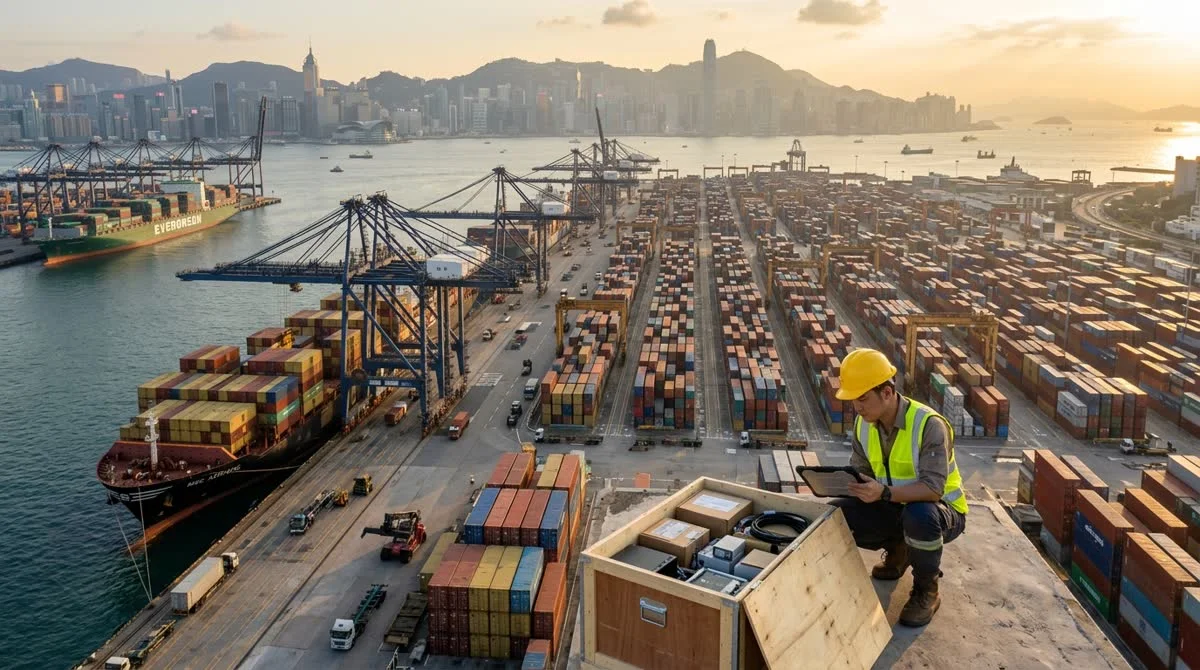
Hong Kong has strengthened its position as a key transit hub for AI chips and high-tech equipment in trade between Asia and China. According to Bloomberg data from July 2, 2026, the city became one of the most important nodes in an Asian trade network worth $2 trillion — a network that surged due to the global AI boom.
Why exactly did Hong Kong become the gateway to China?
Hong Kong's uniqueness in global trade is determined by its legal and customs status. Since its handover to Chinese sovereignty in 1997, the city has retained the status of a separate customs territory with a free port regime — zero import tariffs, minimal restrictions on the movement of goods through ports, airports, and logistics centers. This regime is fundamentally different from mainland China's rules.
Historically, a significant share of Western consumer goods and technology passed through Hong Kong before entering China. Following the onset of US-China trade war in 2018, and then with the introduction of chip sanctions, the role of the hub acquired strategic dimension: companies increasingly use Hong Kong warehouses, banking and logistics infrastructure to organize equipment supplies to China, relying on the territory's more flexible regulatory regime.
Scale and driving forces of AI trade
Key data from the Bloomberg report:
- The Asian trade network, of which Hong Kong is part, is valued at $2 trillion
- The main driver of growth — global demand for AI-compute chips: GPUs, specialized accelerators, server equipment and cooling systems
- Hong Kong acts as a bidirectional intermediary — for goods moving to China and from it
- Free port status significantly reduces tariff and regulatory barriers to transit
Among the most actively traded categories are high-performance GPUs for training neural networks, server racks for data centers, and networking equipment. Growth of AI clusters throughout China — from hyperscalers Alibaba Cloud, Baidu, and Tencent to a wave of independent AI startups — creates sustained demand, driven by strategic investments in AI infrastructure, which the PRC views as a long-term priority.
Sanctions, gray zones, and the geopolitics of chips
The strengthening of Hong Kong's role unfolds against the backdrop of fierce geopolitical confrontation over control of the semiconductor supply chain. Since 2022, the US has consistently restricted exports of advanced chips from NVIDIA, AMD, and other American manufacturers to Chinese companies — from the initial ban on A100/H100 to expanded sanctions lists in 2024–2025. Formally, Hong Kong as part of the PRC falls under the same restrictions.
In practice, the transparency of trade flows through Hong Kong remains a subject of active disputes between regulators. American oversight bodies have repeatedly pointed to the risks of re-export: schemes in which prohibited equipment is officially directed to a third jurisdiction, and then transferred to the end recipient in China. Hong Kong as Asia's largest financial-logistics hub occupies a special place in these investigations.
Nevertheless, trading activity through Hong Kong continues to grow: structural demand for AI equipment is too high for administrative measures to quickly stop it, and reorganizing supply chains requires time.
What does this mean?
Hong Kong reinforces its role as an AI-era trade infrastructure — not as a production or research center, but as a key corridor between China and world markets. The sustainability of this role depends on two variables: continued global AI boom and intensity of sanctions pressure. Growth in computing means growth in traffic through the city; a new round of strict export restrictions could drastically change the situation faster than any long-term plan suggests.
Need AI working inside your business — not just in your newsfeed?
I build production AI for companies — custom CRM, internal tools, autonomous agents, workflow automation. Owned by you, shaped to your process, no per-seat tax. Built by Zhemal Khamidun, CPO of AlpinaGPT (AI platform, 6,000+ users).
The AI world, distilled — once a week
Seven stories that actually mattered, hand-picked. No noise, no reposts, no press releases.
Done! Check your inbox for a confirmation.