Ford Rehires Hundreds of Engineers: Employers Regret Mass Layoffs for AI
AI enthusiasm gives way to a hangover: companies that massively laid off employees for automation are rehiring them. Ford is bringing back hundreds of experienced engineers—AI systems failed to solve quality problems that humans previously managed. Experts note the trend: the thesis 'AI can do everything' no longer works as a justification for layoffs.
AI-processed from 3DNews AI; edited by Hamidun News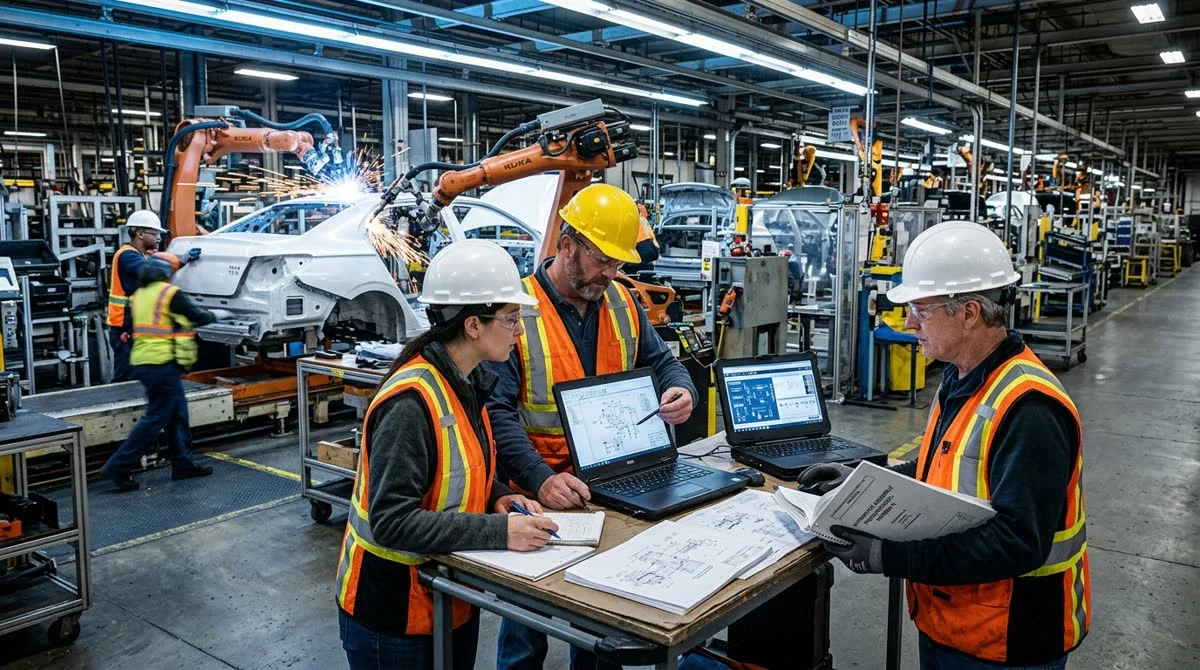
Ford in 2026 announced hiring hundreds of experienced engineers — the same specialists the automaker had laid off during the AI optimization period. Automated systems failed at production quality control, and Ford became one of the most notable examples of a new trend: employers worldwide are beginning to regret mass layoffs made for AI adoption.
Why AI Strategy Backfired
During the generative AI boom, many large employers sharply reduced headcount, based on conviction that algorithms would handle any task faster and cheaper than people. The thesis "AI can do everything" turned into convenient justification for waves of layoffs — from tech companies to industrial giants. Shareholders saw such decisions as reasonable optimization, and top management reported savings on payroll.
Reality proved different. Ford is one of the first major public examples where the automation bet suffered visible failure in a mission-critical area. Quality control problems accumulated over months, while AI systems could neither accurately diagnose their nature nor suggest unconventional engineering solutions. In the end, the company returned to active hiring — specifically hunting for experienced specialists with years of practice, not fresh graduates.
What Was Overlooked in Automation
The key mistake by companies was overestimating generative AI readiness for high-uncertainty tasks. Ford engineers spent years accumulating empirical knowledge of production failures: they could recognize atypical patterns, make decisions with incomplete data, and account for context that simply didn't appear in training datasets. For generative models, such tasks proved significantly harder than seemed at implementation stage.
- Ford in 2026 is returning hundreds of engineers to fix production quality problems
- Automated systems failed at tasks requiring contextual expertise
- The "reverse hiring" trend is appearing in several industries — from auto to tech
- Laid-off specialists went to competitors: bringing them back proved significantly more expensive than retaining them
Beyond technical failures, companies underestimated long-term market consequences of mass layoffs. Experienced specialists didn't wait for callbacks — they moved to competitors, changed industries, or started their own businesses. As a result, the qualified labor market shrank precisely when employers felt acute need again.
The Hidden Cost of Optimization
Costs of re-attracting specialists often exceed savings that automation provided in the short term. Companies notorious for aggressive AI layoffs faced reputation damage: candidates began cautiously reviewing their offers, fearing new optimization waves.
Reassessment leads to new AI positioning — not as human replacement, but as enhancer of human capability. With this approach, more companies are shifting from total automation strategy to human-machine collaboration: a specialist with AI tools is more effective than a specialist without them, and more effective than automation without a specialist.
AI tools work significantly better when there's a qualified person nearby who can set tasks, verify results, and correct model errors. Without such specialist, system accuracy drops and errors accumulate unnoticed — until they transform into production defects or operational failures.
What This Means
Ford's experience and that of other companies is forming practical consensus: betting on total human replacement with algorithms carries serious operational and reputation risks. AI is effective as a tool for enhancing expertise, not replacing it. Employers who realized this earlier are already bringing back valued specialists and paying market premiums for past mistakes.
Want to stop reading about AI and start using it?
AI News is a curated feed of AI/tech news. Hamidun Academy teaches you to use AI systematically in your work.
The AI world, distilled — once a week
Seven stories that actually mattered, hand-picked. No noise, no reposts, no press releases.
Done! Check your inbox for a confirmation.