AI in Medicine: How Neural Networks Diagnose in the NHS App
NHS launches AI triage in its mobile app: an algorithm will evaluate symptoms and determine whether a GP, pharmacy, or emergency services are needed. The pilot will cover 200,000 patients in England over the first year. The initiative is part of a large-scale £10 billion plan to digitize the national health system.
AI-processed from TNW; edited by Hamidun News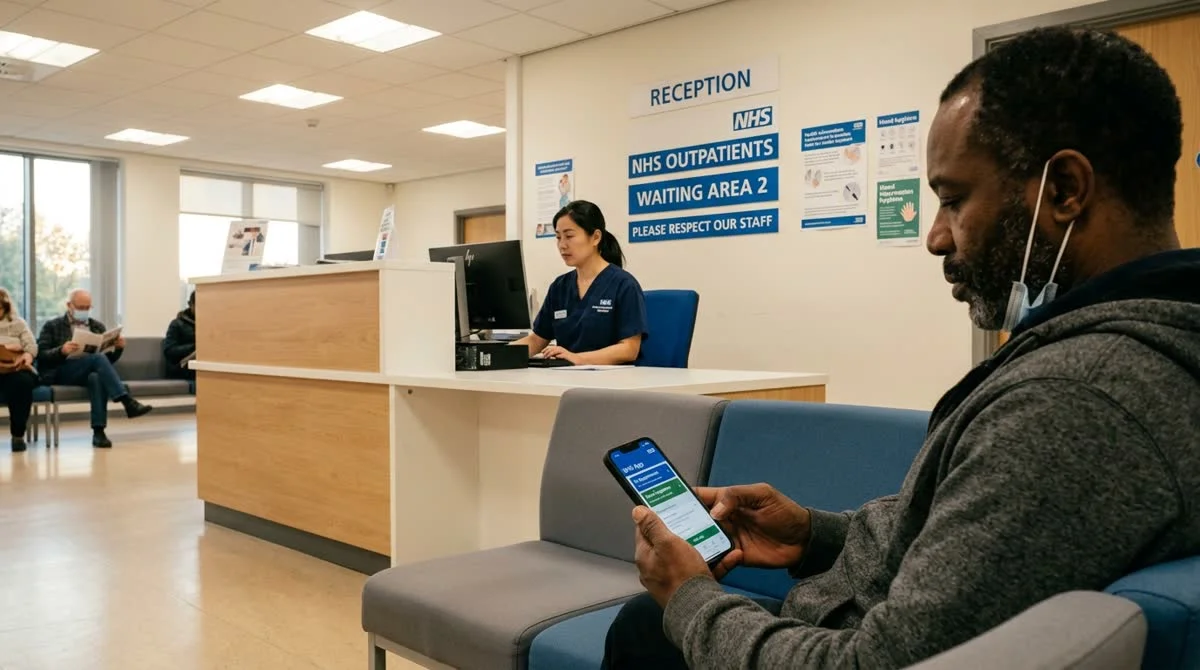
The UK government in July 2026 embedded a neural network in the NHS app: the system will assess patients' symptoms in England and determine whether they need to visit a general practitioner, go to a pharmacy, or call an ambulance.
How AI triage works in NHS App
The new tool is embedded directly in the NHS App — the official mobile application of the National Health Service. A user describes their symptoms, the algorithm analyzes them, and directs them along one of three routes: to a general practitioner (GP), to a pharmacy, or to an emergency department (A&E).
The mechanics are simple but significant: for the first time, the decision to route a patient at the primary level is made not by a human operator but by AI embedded in one of the country's most widely used medical apps. Essentially, the system performs the function of a sorting link that previously rested on the shoulders of operators at services 111 and 999. This automation should relieve the burden on both call centers and the GPs themselves, who now frequently see patients who would have only needed to buy a throat pain medication at a pharmacy.
Key parameters of the pilot:
- Coverage — 200,000 patients in England over the first year
- AI is embedded in the official NHS app
- Three routes: general practitioner (GP), pharmacy, emergency / A&E
- Initiative is part of a £10 billion NHS modernization program
Why NHS is investing £10 billion in digitalization
NHS has operated for decades under conditions of chronic system overloads. Queues to general practitioners stretch for weeks, ambulance services are drowning in off-target calls, and telephone lines 111 — the first point of contact for millions of patients — are constantly overwhelmed. According to NHS estimates, a significant share of requests initially do not require medical care: a person only needed a pharmacy or information about symptoms.
The £10 billion technology plan — one of Europe's largest government IT investments in healthcare — aims for digitalization to become a systemic response to these challenges, not a set of scattered experiments. In addition to AI triage, the program includes a transition to digital medical records, data integration between hospitals and primary care, and replacement of outdated IT infrastructure.
NHS App is already a mature platform covering tens of millions of users. Through it British citizens make appointments, receive test results, renew prescriptions, and check vaccination status. Adding an AI layer should turn the app from a booking tool into a full-fledged first assistant to the patient — a system that doesn't just record a request but makes an initial clinical decision about routing.
What this means
Primary medical care is one of the most overloaded segments of healthcare in any country, and it is here that AI can deliver the greatest practical effect. If the pilot on 200,000 patients shows that AI triage really reduces the proportion of off-target referrals, reduces the burden on GPs, and accelerates access to needed help, NHS will have grounds to scale to all of England — this is tens of millions of app users.
Britain's experience with state deployment of AI in the primary medical circuit will be carefully studied beyond the UK: there are few large examples of a national health system systemically transferring patient routing to AI. If NHS succeeds — it will become a reference point for similar reforms worldwide.
How does a neural network determine if a doctor is needed?
The system assesses the patient's symptoms and determines whether they require a visit to a general practitioner, pharmacy help, or emergency ambulance call.
Can a neural network replace a doctor in NHS?
A neural network does not replace a doctor but helps direct a patient to the right specialist or service — it is a prioritization system (AI triage).
Want to stop reading about AI and start using it?
AI News is a curated feed of AI/tech news. Hamidun Academy teaches you to use AI systematically in your work.
The AI world, distilled — once a week
Seven stories that actually mattered, hand-picked. No noise, no reposts, no press releases.
Done! Check your inbox for a confirmation.