Gemma 4 Parses PDFs as Images: Zero-Shot Approach Without OCR and Cloud
Google's Gemma 4 enables PDF parsing without an OCR pipeline: pages are converted to images and passed directly to the multimodal model. The approach works equally for scans and digital files—eliminating the very distinction that breaks standard parsers. The model runs locally; data never leaves the machine.
AI-processed from KDnuggets; edited by Hamidun News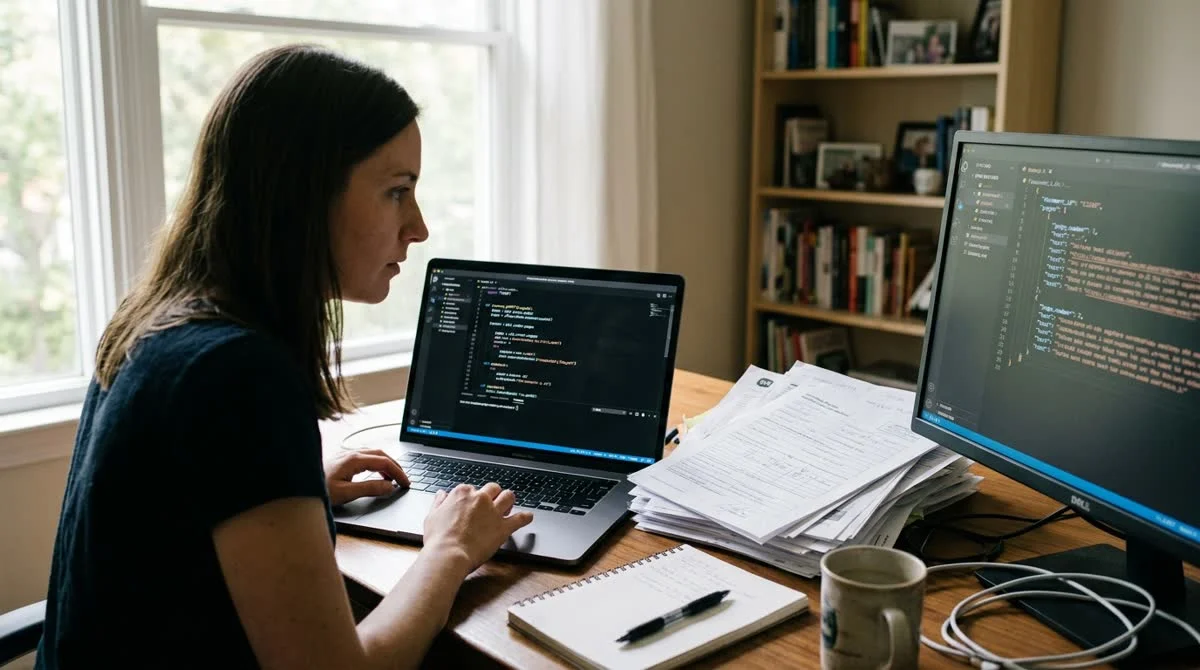
Neural Network for Documents: Gemma 4 Parses PDF Without OCR
The Gemma 4 neural network from Google allows parsing PDF documents without a separate OCR engine: it's sufficient to convert each page to an image and pass it to a multimodal model.
Why Traditional PDF Parsing Breaks
Standard tools for extracting text from PDF work differently depending on the document type. Digital PDFs contain an embedded text layer—libraries like PyMuPDF or pdfplumber extract it in milliseconds. Scanned PDFs are raster images without text metadata, and without an OCR engine they're useless for processing.
In practice, this forces building dual logic: determine document type, choose the right tool, process and normalize the result. Each step adds a point of failure. Tables with multiple columns, handwritten inserts, non-standard fonts, rotated scans—and the pipeline falls apart at the most inconvenient moment.
Typical parsing stack:
- Digital PDFs: direct extraction through PyMuPDF, pdfplumber and analogs
- Scanned PDFs: OCR engine (Tesseract, AWS Textract, Google Vision API)
- Mixed documents: both branches plus additional detection and merging logic
How Gemma 4's Image-Based Approach Works
The idea is simple: don't distinguish between PDF types at all. Each page is converted to PNG or JPEG—and passed to Gemma 4 as visual input. The multimodal model "sees" the page as a whole just like a human does: text, layout structure, tables, charts, and handwritten notes.
The pipeline reduces to three steps: PDF → page-by-page images (via pdf2image or PyMuPDF in rendering mode) → requests to Gemma 4 with image → structured text or JSON. No document type classifier, no parallel OCR branches.
For PDFs with complex layout—two-column articles, technical specifications, forms with fields—the model demonstrates an additional advantage: it perceives the visual hierarchy of the page, not just the linear sequence of characters. Formatted tables and footnote blocks, which text extractors often destroy, remain in the correct context.
Key characteristics:
- Zero-shot—no need to fine-tune the model or write rules for a specific document format
- Universality—works equally well with scans, digital PDFs, and hybrid files
- Local execution—data never leaves the machine; Gemma 4 is available for deployment via Ollama
- Structural parsing—the model understands the hierarchy of headings, multi-column layouts, tables
When Locality and Zero-Shot Are Particularly Important
Running on your own hardware is critical for documents with sensitive data: financial reports, medical records, legal contracts. Cloud OCR services require sending data to third-party servers and create dependence on providers. This often blocks their use in banking, healthcare, and government—exactly where the most valuable document archives accumulate.
Zero-shot also means no need for domain-specific training data. When the archive contains documents of dozens of formats from different sources—invoices, court documents, technical manuals—fine-tuning for each type is unrealistic. The multimodal model handles a new format without prior adjustment.
The most tangible practical advantage manifests when working with corporate archives of mixed type, where documents of different eras are stored intermingled. The classical pipeline processes them through separate branches with heuristics; Gemma 4—in a single request.
"Treating PDFs as images dissolves the scanned-versus-digital
distinction that makes every text-extraction pipeline fragile"—this is how the KDnuggets author formulates the essence of the method.
What This Means
Using Gemma 4 for PDF parsing is a pragmatic alternative to specialized OCR tools for teams with heterogeneous archives: one pipeline instead of two, local instead of cloud, zero-shot instead of fine-tuning. As open multimodal models grow more capable, such approaches will gradually displace narrowly specialized OCR services from typical data pipelines.
What neural network should be used for PDF analysis?
Gemma 4 from Google allows parsing PDF documents without a separate OCR engine: it's sufficient to convert each page to an image and pass it to a multimodal model.
Is it possible to use a neural network instead of OCR for document parsing?
Yes. Gemma 4 converts each PDF page to an image and processes it as a multimodal model, solving the main problem of classical parsers—the need to distinguish between scanned and digital documents.
Want to stop reading about AI and start using it?
AI News is a curated feed of AI/tech news. Hamidun Academy teaches you to use AI systematically in your work.
The AI world, distilled — once a week
Seven stories that actually mattered, hand-picked. No noise, no reposts, no press releases.
Done! Check your inbox for a confirmation.