Ring to Become an Intelligent Assistant Powered by AI
Ring, the Amazon-owned video doorbell maker, plans to become an intelligent assistant using AI. New features will enable devices to more effectively detect and respond to events, enhancing security and usability. The company is betting on AI integration across all of its products.
AI-processed from TechCrunch; edited by Hamidun News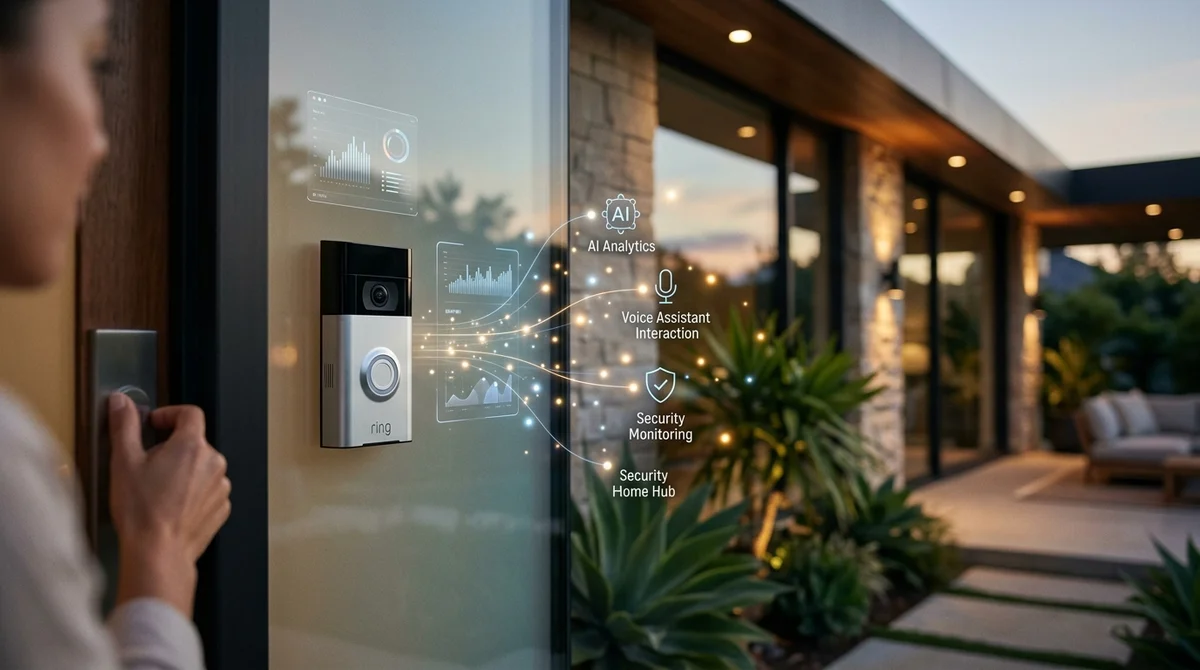
Ring, the video doorbell maker owned by Amazon, is preparing to change its profile: instead of a device that simply records video when there's movement at the door, it is set to become, in TechCrunch's words, an "intelligent assistant." According to the company's founder, this transition became possible thanks to advances in artificial intelligence technology.
From recording motion to analyzing events
Until now, Ring video doorbells performed a single function: they captured video upon detecting motion and let the owner remotely see the visitor and talk to them. With the emergence of more powerful machine learning algorithms, the device is gaining the ability not just to record what's happening, but to analyze it. The AI will learn to distinguish people, animals, and vehicles, as well as recognize potentially dangerous situations — adding a layer of interpretation to what used to be a simple video stream.
What the doorbell will be able to do: from sirens to automatic lighting
Ring describes several scenarios for how the future "intelligent assistant" will work. If the system recognizes an unfamiliar person behaving suspiciously near the house, the doorbell will send the owner a notification on their phone and suggest turning on the siren or contacting the police. If a wild animal appears on the property, the device will issue a separate warning — so the owner has time to take precautions.
Expanded recognition also opens the door to automation not directly related to threats: the doorbell will be able to open the door itself for a courier if the user is expecting a delivery, or turn on the lights when the owner comes home after dark.
Risks: personal data and algorithm accuracy
Using AI in security systems raises questions about personal data protection: it's important that Ring ensures reliable protection of the collected information and prevents its misuse. A separate concern is the accuracy of the algorithms themselves: false positives could turn a useful feature into a source of unnecessary alarms and inconvenience instead of boosting security and comfort.
Why is
Ring shifting from a doorbell to an "intelligent assistant"?
Advances in AI and machine learning algorithms have, for the first time, allowed Ring to move beyond simply recording motion-triggered video to analyzing what's happening at the door — distinguishing people, animals, and vehicles, and identifying dangerous situations. According to the company's founder, it was precisely this progress in AI that made the transition possible; according to TechCrunch, Ring's goal is to become an "intelligent assistant."
How will Ring's AI doorbell recognize dangerous situations?
If the device detects an unfamiliar person behaving suspiciously near the house, it will send the owner a notification on their phone and offer to turn on the siren or contact the police right away. The doorbell will also give a separate warning if a wild animal appears on the property, so the owner has time to take precautions.
What risks do people see in Ring's AI features?
Two main ones: protecting users' personal data from misuse, and the accuracy of the algorithms — false positives could lead to unnecessary alarms and inconvenience instead of the benefits of a security system.
Want to stop reading about AI and start using it?
AI News is a curated feed of AI/tech news. Hamidun Academy teaches you to use AI systematically in your work.
The AI world, distilled — once a week
Seven stories that actually mattered, hand-picked. No noise, no reposts, no press releases.
Done! Check your inbox for a confirmation.