GPT-5 in a White Coat: OpenAI Enters Big Science
GPT-5 in a Lab Coat: OpenAI Goes Into Big Science Three years ago, ChatGPT burst into our lives, teaching us to delegate routine tasks—from writing emails to generating code. We've grown accustomed to AI being able to create a workout plan or explain quantum physics in simple terms. But OpenAI thinks it's time to stop simply explaining science and start doing it. The company under Sam Altman's leadership is shifting its focus from office clerks to people in white coats. This isn't just a marketing move, but a strategic deployment on a field where mistakes cost far more than a failed social media post. For a long time, it was believed that language models were just advanced text autocompletes. They excel in humanities, but struggle with the strict logic of natural sciences. However, OpenAI is systematically proving otherwise.
AI-processed from MIT Technology Review; edited by Hamidun News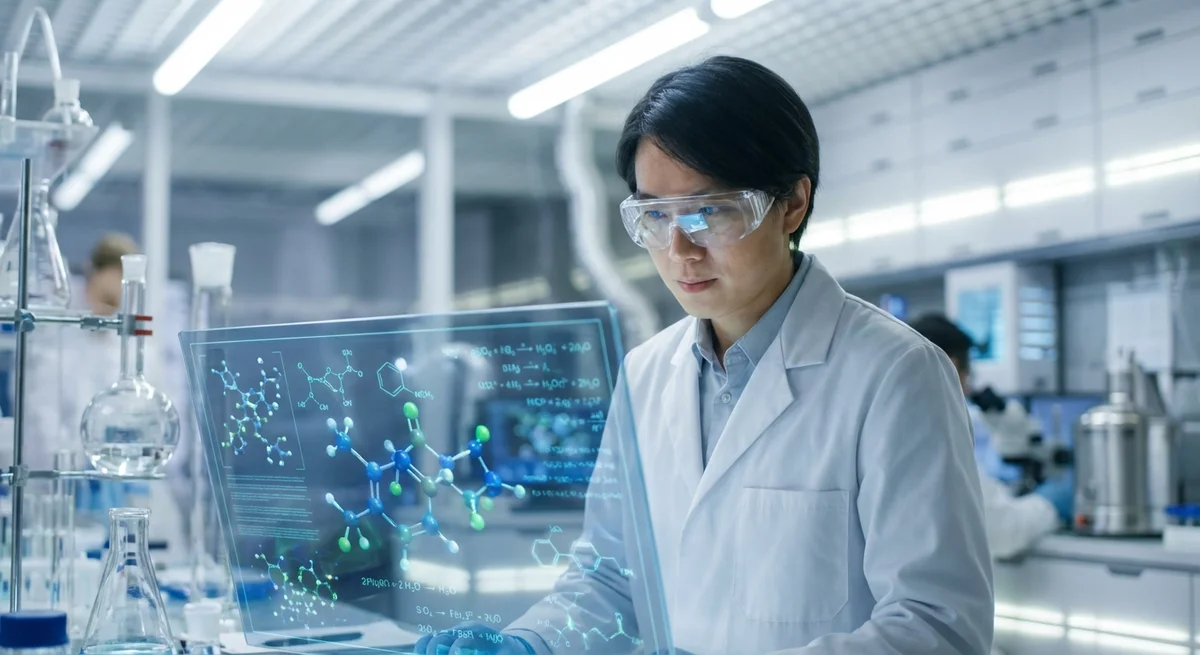
From Office Assistant to the Laboratory
Three years since ChatGPT's debut have trained users to delegate routine tasks to neural networks — from emails to code. For a long time, it was believed that language models excelled at humanities-oriented tasks but faltered against the rigorous logic of the natural sciences. After the success of the o1 model, which learned to reason, OpenAI became convinced: the potential for deep research is enormous.
In October, this conviction materialized into a concrete step — the official launch of a program to embed AI in the scientific environment and a partnership with Los Alamos National Laboratory. The choice of partner is symbolic: this is the very place where the United States' nuclear shield was once forged, meaning the bar for accuracy and reliability here has historically been higher than in any office task.
What Exactly OpenAI Is Doing at Los Alamos
This isn't about a chatbot for searching articles. OpenAI is developing specialized benchmarks and tools to assess how effectively models can assist in biological and chemical experiments. This includes analyzing complex molecular structures, predicting reaction outcomes, and helping plan laboratory tests. Crucially, the company isn't simply opening up API access — it's building an entire ecosystem in which AI becomes a full-fledged participant in the research process, rather than an external tool for quick information lookup.
The Race With Google DeepMind
The timing is no accident — competition is the driving motive here. Google DeepMind, with its AlphaFold, has already revolutionized biology by predicting the structures of nearly all known proteins. OpenAI cannot allow a competitor to solely hold the title of the most scientific AI. If ChatGPT becomes the standard in laboratories the way it became the standard in offices, the company will gain access to the most valuable resource — data about real physical processes. This is critically important for building AGI, which must understand the world not only through text but also through the laws of matter.
Biosafety Risks
Using AI in biology and chemistry inevitably raises biosafety questions: a neural network's ability to design a new pharmaceutical drug could theoretically also be applied to create something far less humane. This is precisely why OpenAI so emphasizes its partnerships with government institutions like Los Alamos National Laboratory — it's a way of showing regulators that the process is under control. But behind the facade of safety lies a fierce battle for intellectual leadership in the industry: if the company's next model helps achieve a real breakthrough in medicine or energy, the question of AI's practical usefulness will be settled once and for all.
When did
OpenAI launch its collaboration program with Los Alamos National Laboratory?
In October — the company officially announced the launch of a program to embed AI in the scientific environment, starting a partnership with Los Alamos National Laboratory, where the United States' nuclear shield was once created.
How does
OpenAI's approach differ from Google DeepMind's in science?
DeepMind, with AlphaFold, focused on predicting protein structures and has already predicted nearly all known protein structures. OpenAI is taking a broader approach: developing benchmarks and tools to assist in biological and chemical experiments — analyzing molecular structures, forecasting reaction outcomes, planning laboratory tests — embedding AI directly into the research process rather than just the prediction stage.
What risks does using AI in biology and chemistry carry?
The main risk is biosafety: a model's ability to design a new pharmaceutical drug could theoretically be used to create less humane substances. That's why OpenAI is building partnerships with government institutions such as Los Alamos National Laboratory — a signal to regulators that the technology's development is under control.
Want to stop reading about AI and start using it?
AI News is a curated feed of AI/tech news. Hamidun Academy teaches you to use AI systematically in your work.
The AI world, distilled — once a week
Seven stories that actually mattered, hand-picked. No noise, no reposts, no press releases.
Done! Check your inbox for a confirmation.