Nvidia buys loyalty: why Jensen Huang is pouring 2 billion into CoreWeave
When a company with enormous debt receives a check for two billion dollars, it usually smells like either desperation or brilliant calculation. With CoreWeave and Nvidia, we're witnessing the latter. Jensen Huang decided not merely to support his favorite cloud provider, but essentially to reserve a prime spot for the upcoming Rubin architecture. This partnership looks like Nvidia's attempt to create an ideal testing ground for rolling out its most powerful hardware while bypassing the bureaucracy and caprices of hyperscalers like Microsoft or Google. CoreWeave has traveled a remarkable journey from humble Ethereum miners to the world's largest specialized AI cloud. However, aggressive expansion requires colossal sums, and the company's debts began raising questions from skeptics as far back as last year. Nvidia's injection sends a clear market signal: CoreWeave is too important to fail.
AI-processed from TechCrunch; edited by Hamidun News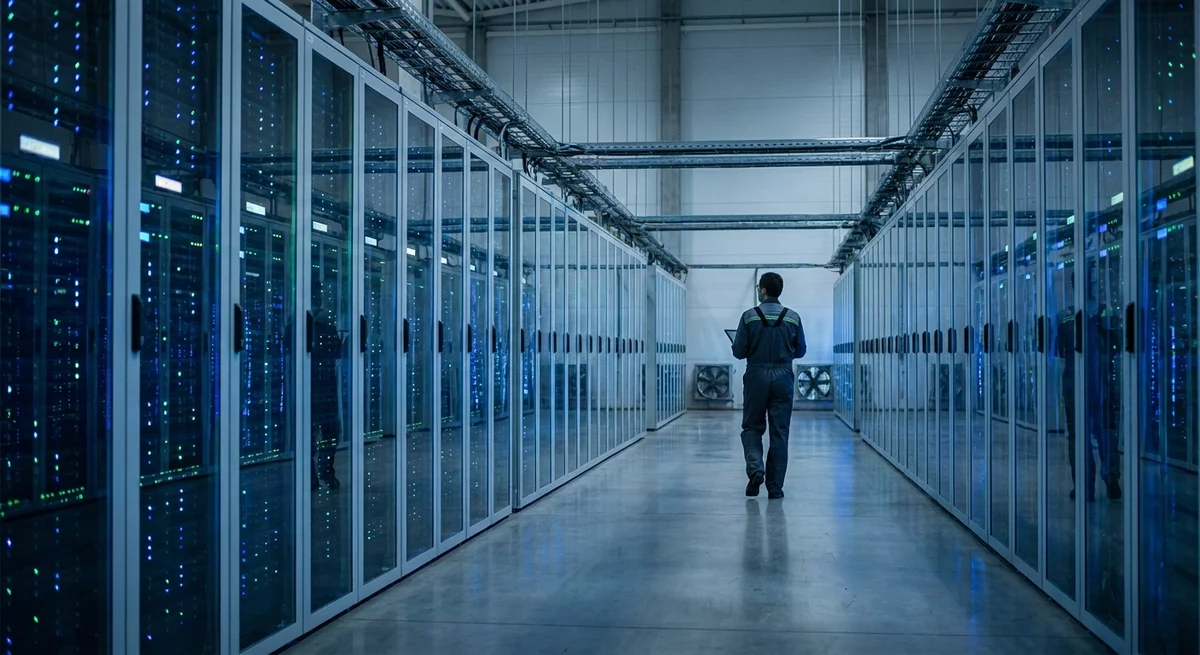
Nvidia has invested $2 billion in CoreWeave, and in return received something that can't be measured in money: a guaranteed testing ground for rolling out the Rubin architecture — the successor to Blackwell — even before its mass-market launch. According to TechCrunch, CoreWeave is also integrating Nvidia's products across its entire platform, including the new Rubin chip architecture.
CoreWeave's journey: from
Ethereum mining to the largest AI cloud
CoreWeave has gone from a modest Ethereum miner to the largest specialized AI cloud in the world. Aggressive expansion required colossal amounts of money, and the company's debts started raising questions among skeptics as far back as last year. The injection from Nvidia is a clear signal to the market: CoreWeave is too important to fail. The company announced plans to deploy 5 gigawatts of capacity dedicated exclusively to training and inference of neural networks — a figure that makes both competitors and energy providers nervous. For comparison, that much power would be enough to supply electricity to several mid-sized European cities.
Closed loop: how the Nvidia-CoreWeave partnership works
Nvidia's interest here is pragmatic: Nvidia provides the money that CoreWeave uses to buy chips from Nvidia in order to attract customers who will pay for access to Nvidia's technology. This vertical integration effectively makes CoreWeave an external division of the corporation, allowing Jensen Huang to control not just production but the very consumption of computing resources — bypassing the bureaucracy and whims of hyperscalers like Microsoft or Google.
Rubin: a new chip and an accelerated release cycle
Rubin is the successor to Blackwell, about which the market is only just starting to learn details. Nvidia is speeding up its release cycle for new chips to one year, and it needs venues capable of instantly deploying tens of thousands of such devices. CoreWeave becomes exactly that venue: the $2 billion investment is a guarantee that Rubin won't sit gathering dust in warehouses but will immediately start generating data and profit, proving Nvidia's superiority over AMD and Intel.
What this means for the industry
The barrier to entry into the top tier of AI clouds is becoming unreachable: without a graphics giant with bottomless pockets, competing on capacity is pointless. Nvidia is clearly preparing for an era when training models on the scale of GPT-5 and beyond will require resources that seem fantastical today, and 5 gigawatts is the infrastructure foundation for a world where AI is present in every process. Nvidia isn't just selling shovels during a gold rush — it's buying the mines themselves and hiring the prospectors.
For AI startups, this is good news: there will be more capacity available. For Nvidia's competitors, it's a warning sign: they will have to not just make better hardware but also find partners willing to build infrastructure of this scale amid a heavy debt burden.
How much did Nvidia invest in CoreWeave?
Nvidia invested $2 billion in CoreWeave — the largest specialized AI cloud provider, which grew out of an Ethereum miner. The investment comes alongside the integration of Nvidia's products across CoreWeave's entire platform, including the new Rubin chip architecture.
What is the
Rubin architecture and why does CoreWeave need it?
Rubin is the successor to the Blackwell architecture, Nvidia's next generation of chips. The company is speeding up its release cycle for new chips to one year, so it needs venues capable of quickly deploying tens of thousands of devices. CoreWeave, by integrating Rubin into its platform, becomes that venue — the chips get tested in real-world conditions even before becoming widely available to the rest of the market.
How much capacity does CoreWeave plan to deploy?
CoreWeave announced plans to deploy 5 gigawatts of capacity dedicated exclusively to training and inference of neural networks. For comparison, that much power would be enough to supply electricity to several mid-sized European cities.
Need AI working inside your business — not just in your newsfeed?
I build production AI for companies — custom CRM, internal tools, autonomous agents, workflow automation. Owned by you, shaped to your process, no per-seat tax. Built by Zhemal Khamidun, CPO of AlpinaGPT (AI platform, 6,000+ users).
The AI world, distilled — once a week
Seven stories that actually mattered, hand-picked. No noise, no reposts, no press releases.
Done! Check your inbox for a confirmation.