WhatsApp opens the door to rivals: chatbots from third-party AI companies are coming to Brazil
Meta is expanding its program to allow third-party AI chatbots in WhatsApp. After launching in Europe, a similar option will become available to users in Brazil. Competing AI companies will be able to offer their assistants inside the messenger on a paid basis. The decision comes amid regulatory pressure in the EU and strategic interest in Latin America’s largest market. The move could turn WhatsApp from just a messenger into a full-fledged AI platform with an ecosystem of third-party developers.
AI-processed from TechCrunch; edited by Hamidun News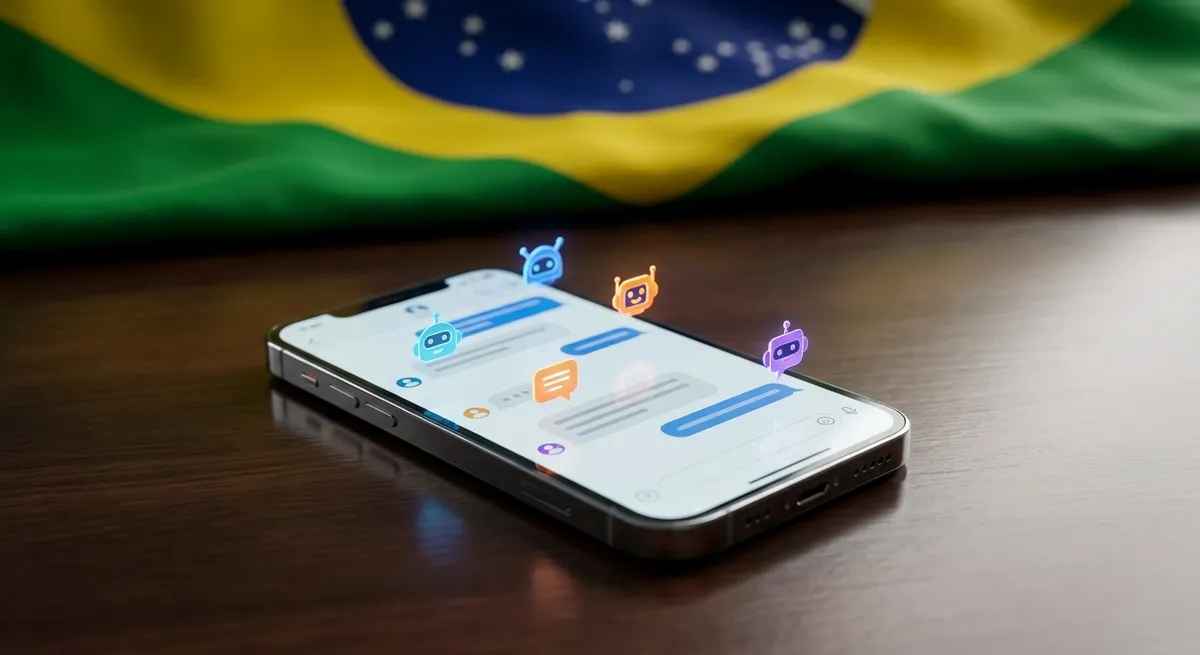
Meta has opened WhatsApp to third-party AI chatbots in Brazil — the world's second-largest messenger market after India, where WhatsApp is installed on more than 93% of smartphones. The decision was made on a paid basis, just one day after a similar move for Europe — but unlike the European case, the Brazilian decision was dictated by no one: there is no equivalent of the Digital Markets Act here, meaning Meta is opening the platform to competitors voluntarily.
From Europe to Brazil: different motivations
In Europe, allowing third-party AI bots into WhatsApp was largely a forced move. The Digital Markets Act requires the largest technology platforms to ensure interoperability and not discriminate against competitors, and WhatsApp, with its "gatekeeper" status, falls directly under these rules. Opening the messenger to outside chatbots was a logical response to regulatory pressure.
Brazil is a completely different story. There is no equivalent of the DMA here, and no strict requirements for platform openness. The fact that Meta rolled out the same policy to the Brazilian market literally the day after Europe suggests that the company is driven not by legal necessity but by strategic calculation — and is moving noticeably faster than one might have expected.
The world's second-largest WhatsApp market
Brazil is the second-largest WhatsApp market after India. The messenger here has long gone beyond simple communication: people use it to do business, book doctor's appointments, pay for purchases, and interact with government services. By various estimates, WhatsApp is installed on the smartphones of more than 93% of Brazilians, and for a significant part of the population it is effectively synonymous with the internet. Opening such an audience to third-party AI companies means creating a potentially giant artificial intelligence marketplace, not simply adding a new feature to the messenger.
A new model: platform instead of monopoly
The mechanics so far look like this: AI companies will be able to offer their chatbots inside WhatsApp on a paid basis. Meta is not disclosing pricing details, but the very fact of monetizing through granting competitors access is a fundamentally new business model for the company. Instead of competing with everyone through its own Meta AI, Zuckerberg is betting on a platform approach: WhatsApp is becoming something like an app store for AI assistants, and Meta earns money from each of them — similar to the strategy that once made Apple and Google dominant players in the mobile ecosystem.
For competitors — be it OpenAI, Google, Anthropic, or regional AI startups — access to WhatsApp's audience radically lowers the barrier to entry: there's no need to convince users to download a separate app; the assistant appears right inside the messenger that people already use dozens of times a day.
Open questions: moderation, data, LGPD
Serious questions remain unanswered. How will Meta moderate third-party bots, and who is responsible for their errors and hallucinations? What happens to user data if WhatsApp has traditionally positioned itself as an end-to-end encrypted platform, while interacting with an AI bot by definition involves passing data to a third party? In Brazil, which has its own data protection law (LGPD), these questions are especially pressing.
There's also a competitive nuance: by admitting third-party players, Meta simultaneously gains data on which AI services are in demand and how users interact with them — information that can be used to develop its own Meta AI, which is reminiscent of the criticism leveled at Amazon for using third-party sellers' data on its marketplace. If the experiment in Europe and Brazil proves successful, the next in line are likely to be India, Indonesia, Mexico, and other major WhatsApp markets.
What exactly did Meta announce for Brazil?
Meta has allowed competing AI companies to place their chatbots in WhatsApp for users in Brazil on a paid basis — this happened one day after a similar decision for the European market.
How does the Brazil decision differ from the European one?
In Europe, allowing third-party AI bots was a response to the Digital Markets Act's requirements on interoperability for "gatekeeper" platforms. In Brazil there is no such regulatory requirement, so Meta's decision is voluntary and strategic rather than forced.
What risks are seen in this decision?
The main open questions are the moderation of third-party bots and responsibility for their errors, the compatibility of admitting AI assistants with WhatsApp's end-to-end encryption principle, compliance with Brazil's LGPD data protection law, and the fact that by giving competitors access to its platform, Meta also gains data on their popularity, which it can use to develop its own Meta AI.
*Meta has been declared an extremist organization and is banned in Russia.
Want to stop reading about AI and start using it?
AI News is a curated feed of AI/tech news. Hamidun Academy teaches you to use AI systematically in your work.
The AI world, distilled — once a week
Seven stories that actually mattered, hand-picked. No noise, no reposts, no press releases.
Done! Check your inbox for a confirmation.