Rishi Sunak on the Arctic, NATO, and AI Regulation
Former British Prime Minister Rishi Sunak, speaking at the World Economic Forum in Davos, addressed a range of key issues, from geopolitical tensions in the Arctic to prospects for AI regulation. His comments, made in a Bloomberg interview, reflect concern about the current state of international relations and recognition of the need to develop unified approaches to managing new technologies. In particular, Sunak welcomed the achievement of an agreement between the United States and NATO on the Greenland issue, but emphasized that the negotiation process itself has damaged trust among allies. This statement is particularly relevant against the backdrop of growing competition in the Arctic region, where climate change opens new opportunities for economic activity and intensifies the geopolitical interests of various states.
AI-processed from Bloomberg Tech; edited by Hamidun News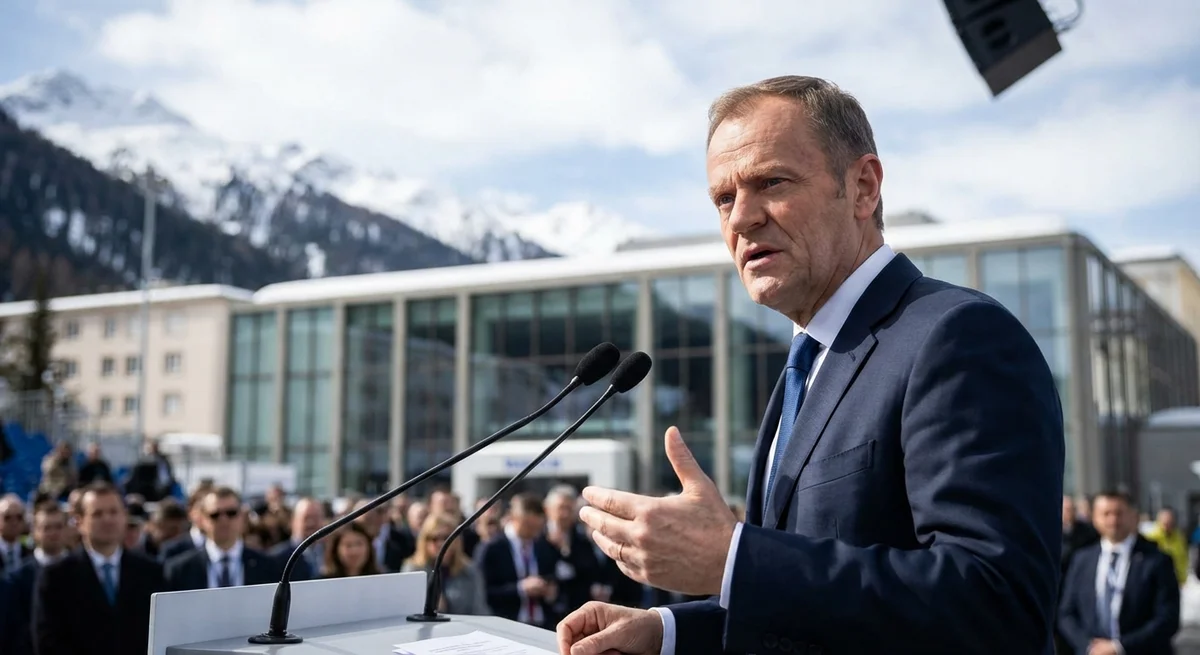
Former British Prime Minister Rishi Sunak, speaking at the World Economic Forum in Davos, addressed a range of key issues, from geopolitical tensions in the Arctic to prospects for AI regulation. His comments, made in a Bloomberg interview, reflect concern about the current state of international relations and recognition of the need to develop unified approaches to managing new technologies.
In particular, Sunak welcomed the achievement of an agreement between the United States and NATO on the Greenland issue, but emphasized that the negotiation process itself has damaged trust among allies. This statement is particularly relevant against the backdrop of growing competition in the Arctic region, where climate change opens new opportunities for economic activity and intensifies the geopolitical interests of various states. Greenland, with its strategically important position and rich natural resources, is becoming the object of close attention from both traditional players and new participants.
Beyond Arctic issues, Sunak touched on the topic of AI regulation. He noted that the development of this technology requires global cooperation and the development of common standards and principles. Otherwise, in his view, the world could face unpredictable consequences, including increased social inequality, the spread of disinformation, and even security threats. The importance of international cooperation in AI is underscored by the fact that this technology knows no borders and can spread rapidly around the world.
The consequences of the lack of coordinated AI regulation could be quite serious. For example, uncontrolled use of machine learning algorithms could lead to discrimination and bias in various spheres, from hiring to lending. Moreover, the development of autonomous weapons raises questions about ethical norms and principles of humanitarian law. Therefore, in Sunak's view, it is necessary to urgently develop international frameworks that would ensure safe and responsible use of AI.
In conclusion, Rishi Sunak's speech in Davos emphasizes the importance of a comprehensive approach to solving global problems. From geopolitical tensions in the Arctic to AI regulation – all these issues require international cooperation, dialogue, and the search for compromise. Only through joint efforts can a more stable and secure world be built.
Need AI working inside your business — not just in your newsfeed?
I build production AI for companies — custom CRM, internal tools, autonomous agents, workflow automation. Owned by you, shaped to your process, no per-seat tax. Built by Zhemal Khamidun, CPO of AlpinaGPT (AI platform, 6,000+ users).
The AI world, distilled — once a week
Seven stories that actually mattered, hand-picked. No noise, no reposts, no press releases.
Done! Check your inbox for a confirmation.