Gimlet Labs Raises $80M for Unified AI Inference Across NVIDIA, AMD, Intel and Other Chips
Gimlet Labs has closed a Series A funding round at $80M. The company created a software layer that enables running AI inference simultaneously across NVIDIA, AMD, Intel, ARM, Cerebras, and d-Matrix chips without rewriting code for each stack. Essentially — POSIX for AI hardware: write once, the platform automatically optimizes for available equipment.
AI-processed from TechCrunch; edited by Hamidun News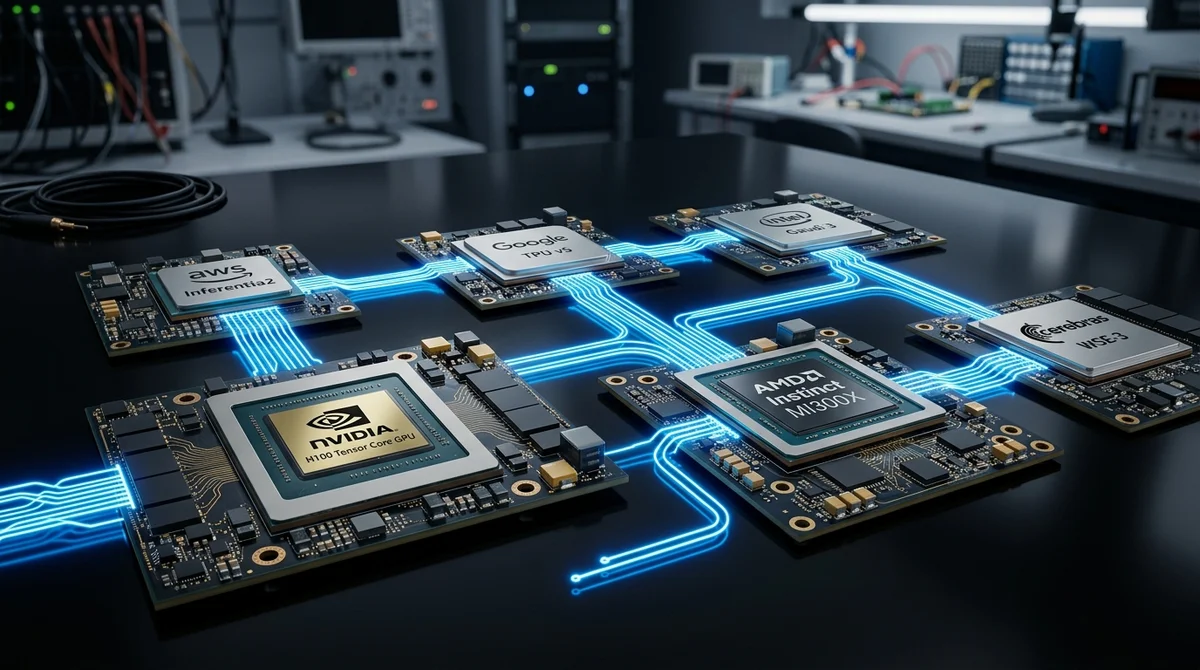
Gimlet Labs raised $80 million in a Series A funding round for developing technology that addresses one of the key problems in modern AI — the dependence of models on specific hardware. The company has created a software layer that enables running neural network inference simultaneously on chips from six manufacturers: NVIDIA, AMD, Intel, ARM, Cerebras, and d-Matrix. The problem that Gimlet Labs solves is familiar to anyone who has deployed AI in production.
Each chip manufacturer provides its own software stack — CUDA for NVIDIA, ROCm for AMD, oneAPI for Intel. Switching from one piece of hardware to another requires rewriting code, testing, and lengthy debugging. Companies become locked in to suppliers: even if AMD offers better pricing or Cerebras delivers superior performance for a specific task, migration is too costly.
Gimlet Labs offers a unified API for all supported platforms. Essentially, this is an abstraction layer between the model and the hardware — analogous to what POSIX once did for operating systems. A developer writes code once, and the platform automatically optimizes execution for available hardware.
The inclusion of d-Matrix and Cerebras in the list is particularly noteworthy — niche players specializing in inference. This sends a market signal: Gimlet Labs is not limiting itself to the mainstream. $80 million is a serious bet that the chip market fragmentation problem will not resolve itself.
Investors clearly believe that hardware manufacturers will not reach agreement among themselves, which means the market genuinely needs a neutral abstraction layer for the long term. The funding round underscores that the infrastructure level of the AI stack is becoming as strategically important as the models themselves. For corporate AI buyers, such technology means real negotiating power.
Today, a huge portion of AI infrastructure spending goes to NVIDIA — not because alternatives don't exist, but because switching is too painful. If Gimlet Labs truly reduces the cost of migration to acceptable levels, business gains leverage: they can buy from whoever offers the best price at any given moment, rather than from whoever their codebase is already tied to. The elegance of the solution lies not in the idea of an abstraction layer itself (it has been known for a long time), but in the fact that the team managed to implement it without catastrophic performance loss.
This is typically where similar projects fail: universality does not sit well with optimization. How well Gimlet Labs has managed this contradiction will be shown in production.
Need AI working inside your business — not just in your newsfeed?
I build production AI for companies — custom CRM, internal tools, autonomous agents, workflow automation. Owned by you, shaped to your process, no per-seat tax. Built by Zhemal Khamidun, CPO of AlpinaGPT (AI platform, 6,000+ users).
The AI world, distilled — once a week
Seven stories that actually mattered, hand-picked. No noise, no reposts, no press releases.
Done! Check your inbox for a confirmation.