Journalist files class action against Grammarly for using her name in AI feature without consent
For months, Grammarly used the names and likenesses of real journalists in its AI feature "Expert Review" — without their consent. Journalist Julia Angwin filed a class action against the company Superhuman, alleging violations of publicity and privacy rights. The lawsuit could cover all "experts" whose identities were used unlawfully.
AI-processed from The Verge; edited by Hamidun News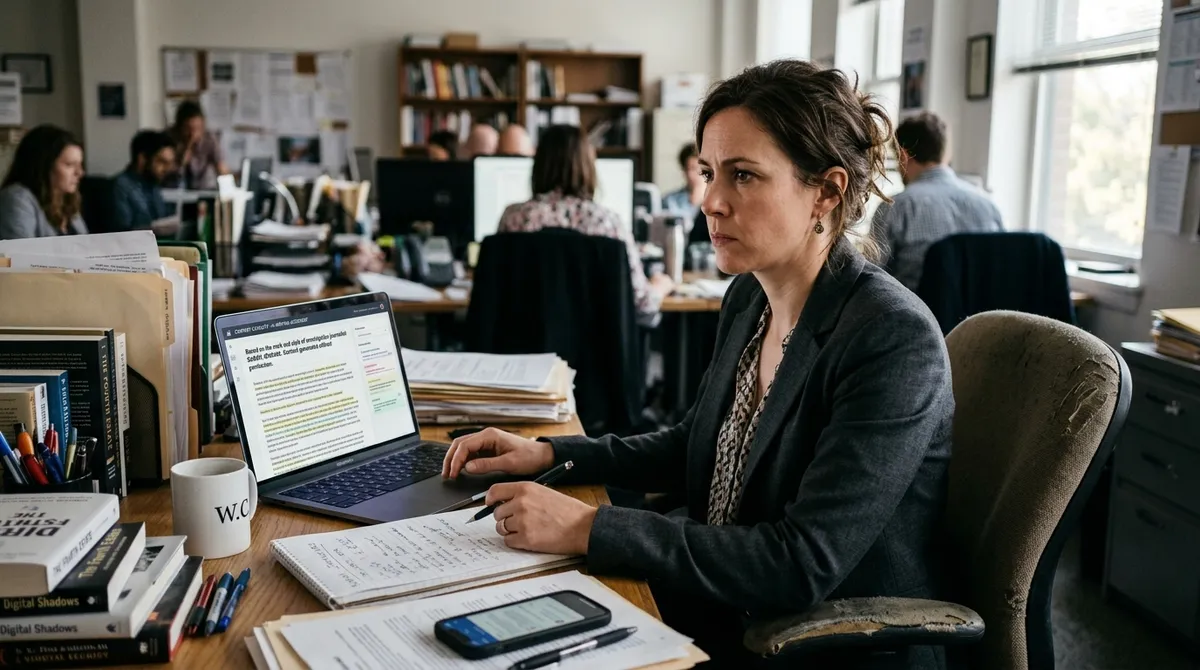
Journalist Files Class-Action Lawsuit Against Grammarly for Using Her Name in AI Feature Without Consent
Journalist Julia Angwin filed a class-action lawsuit against Superhuman Platform, Inc., the parent company of Grammarly, accusing the company of using her name in the AI-powered Expert Review feature without permission. The lawsuit, titled Angwin v. Superhuman Platform, Inc., was filed on Wednesday in March 2026; the news was first reported by Wired and later by The Verge.
What Angwin's Claims Amount To
The lawsuit asserts that Superhuman violated the rights of "experts" to privacy and the right to publicity, applying other people's identities for commercial purposes without consent. According to The Verge, for several months Grammarly used the identities of real people—including employees of the publication itself—in the Expert Review feature without asking for permission. The lawsuit is filed as a class-action suit, meaning Angwin acts not only in her own name but on behalf of all "experts" whose data was used in this manner.
- The lawsuit Angwin v. Superhuman Platform, Inc. was filed by journalist Julia Angwin on Wednesday in March 2026
- Grammarly used the identities of real people in the Expert Review feature for several months without consent
- Angwin learned about the use of her name through journalist Casey Newton—also one of the "experts" whose identity The Verge discovered in Grammarly's tool
- The practice at Grammarly was previously written about by Wired, and first exposed by The Verge
How Angwin Learned About Her Name Being Used
Angwin said she learned what was happening through journalist Casey Newton, who also turned out to be among the "experts" whose names The Verge found in Grammarly's Expert Review feature. Newton wrote about the situation in his Platformer newsletter—it was from there, according to Angwin, that she learned about the use of her own name. Newton is not alone: according to The Verge, the publication previously found the names of several of its employees, including the editor-in-chief, used in the same AI tool.
"Superhuman violated the rights of 'experts' to privacy and the right to publicity, applying other people's identities for commercial purposes without consent," is how
The Verge characterizes the lawsuit's claims.
Wired previously wrote about this Grammarly practice, and The Verge was the first to expose the use of others' names and style in Expert Review without permission—among those affected were employees of the publication itself. By the time the lawsuit was filed, Superhuman had already received public criticism for the feature, but according to The Verge, Angwin's complaint moves the dispute into the legal arena.
What This Means
The lawsuit moves the Grammarly scandal from the realm of reputation management into the courts: if the court recognizes a violation of privacy rights and the right to publicity, the case Angwin v. Superhuman Platform, Inc. could set a precedent for other AI services that use others' names and style without permission. For Superhuman, this means legal risks that go far beyond public criticism from The Verge and Wired—the company now faces concrete claims in court.
Need AI working inside your business — not just in your newsfeed?
I build production AI for companies — custom CRM, internal tools, autonomous agents, workflow automation. Owned by you, shaped to your process, no per-seat tax. Built by Zhemal Khamidun, CPO of AlpinaGPT (AI platform, 6,000+ users).
The AI world, distilled — once a week
Seven stories that actually mattered, hand-picked. No noise, no reposts, no press releases.
Done! Check your inbox for a confirmation.