Vibe-code review: how Claude Opus writes beautiful C++ that does not work correctly
Generating code with AI has become easy — but verifying it has become more important than ever. Using the markus project written by Claude Opus as an example, the authors at PVS-Studio show how beautiful C++ can hide problems with decomposition, efficiency, and safety. The skill of code review is moving to the forefront.
AI-processed from Habr AI; edited by Hamidun News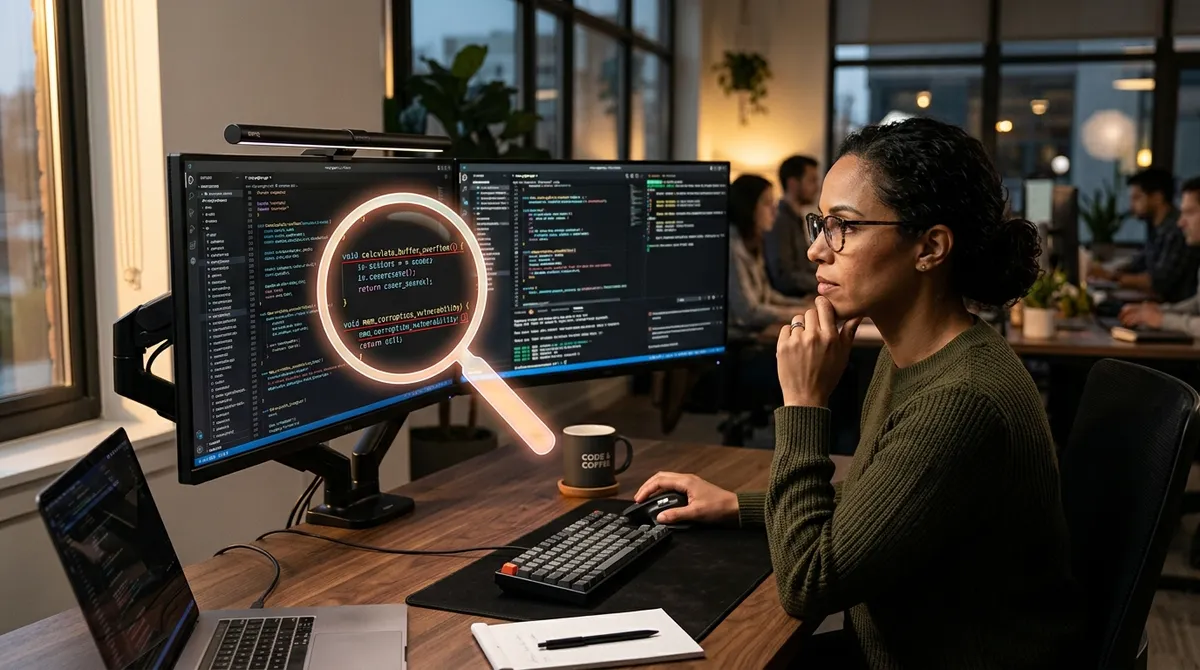
When AI writes beautiful code — that doesn't mean the code is good. It is precisely this thesis that specialists at PVS-Studio test in practice, having reviewed a small project called markus, generated entirely with Claude Opus. Vibe coding — a practice in which a developer describes a task to a language model and accepts the result with minimal changes — is gaining popularity.
The barrier to entry is lowering, prototyping speed is rising. But along with this, the risk grows: unchecked code can look professional, read easily, and yet contain architectural and logical errors that will only be discovered under load or with specific input data. The authors took the markus project — a small C++ program created by Claude Opus — and conducted a full code review.
The results are telling: the code appears optimized and well-structured, yet upon careful examination, issues emerge with decomposition quality, incorrect implementations of individual functions, questions about efficiency, and potential security vulnerabilities. None of these problems stand out at a glance — AI knows how to make code visually convincing. This is natural.
Language models are trained on vast arrays of source code; they reproduce stylistic patterns and syntactic constructs with high precision. But the model bears no responsibility for runtime behavior, does not test edge cases, and does not think about how the code will be maintained six months from now. Responsibility remains with the human.
In this context, the value of an experienced developer shifts. Writing a function can now be done by almost anyone with a prompt. But understanding whether it is implemented correctly, whether it aligns with the architecture, whether it creates technical debt for the future — this still requires expertise.
Code review transforms from an auxiliary process into a key quality filter in the age of AI development. Materials from PVS-Studio remind us: static analysis tools become especially relevant right now, when the volume of generated code is growing faster than teams' ability to review it manually. Automated analysis doesn't replace review, but it helps avoid missing what the eye is accustomed to overlooking.
The conclusion is simple: AI-generated code must be read as critically as a junior developer's code during their trial period. Beautiful formatting and confident style — these are not guarantees of correctness. The ability to see beyond the facade — that is what distinguishes a strong engineer in 2025.
Need AI working inside your business — not just in your newsfeed?
I build production AI for companies — custom CRM, internal tools, autonomous agents, workflow automation. Owned by you, shaped to your process, no per-seat tax. Built by Zhemal Khamidun, CPO of AlpinaGPT (AI platform, 6,000+ users).
The AI world, distilled — once a week
Seven stories that actually mattered, hand-picked. No noise, no reposts, no press releases.
Done! Check your inbox for a confirmation.