KDnuggets
AI news source. Articles are auto-selected and adapted by Hamidun News editors.
Latest publications

MIT researchers outline a just-in-time model for planning and prediction
A new arXiv paper shows how humans and AI can build a simplified world model as needed: this reduces memory load while preserving the quality of prediction and planning.

KDnuggets lists seven free web APIs for AI agents and vibe coding
KDnuggets compiled seven web APIs with a free starting tier that help AI agents search, scrape, browse, and explore websites without assembling a complex stack manually.

OpenAI Whisper, React, and FastAPI: how to build an AI meeting summarizer with no budget
A detailed breakdown shows how to build an AI service for meeting summaries without paid APIs: Whisper handles transcription, FastAPI and React handle the product layer, and free LLMs handle analysis.

KDnuggets listed 10 LLMOps tools teams should add to their stack in 2026
KDnuggets listed 10 key LLMOps tools for 2026 — from model routing and observability to guardrails, agent memory, and artifact packaging.

KDnuggets lists the five largest skill marketplaces for AI agents in 2026
KDnuggets compiled five platforms where prebuilt skills for AI agents can already be searched, compared, and installed — from giant catalogs to storefronts with security checks and CLI installation.

5 Docker containers for AI agent developers: spin up and get to work
Five Docker containers for agent developers: Ollama, Qdrant, n8n, Flowise, and Open WebUI — the entire core stack comes up in minutes with no configuration.

OpenClaw: five projects for building a personal AI assistant, from chats to a server
A selection of five projects shows how to turn OpenClaw from a chatbot into a personal assistant by connecting messaging apps, local models, Google Workspace, a browser, and a VPS.

KDnuggets releases a RAG guide: seven steps to reliable LLM applications without hallucinations
KDnuggets outlines seven key stages of building RAG systems — from data cleaning and chunking to context retrieval, answer evaluation, and tuning enterprise LLMs on real documents.

Google Antigravity: five useful use cases beyond code — from research to database work
Google presents Antigravity as more than a coding IDE: the platform is already suitable for research, interface documentation, parallel agent work, and database queries.

OWASP and OpenClaw: why AI agents are becoming a new security problem
AI agents no longer just respond to requests — they act inside company systems, and that is what turns shadow AI, plugins, and agent memory into a new attack surface.

KDnuggets showed how to run Qwen3.5 on an old laptop with Ollama and OpenCode
KDnuggets released a practical guide to running Qwen3.5 4B locally on an old laptop: with Ollama and OpenCode, you can build a private AI environment for code, tests, and experiments.

Google expands NotebookLM with five new features for advanced research workflows
Google has updated NotebookLM for advanced users: the service can now make targeted slide edits, export presentations to PPTX, assemble artifacts from chat, and work with EPUB.

Why a human working with ChatGPT and Claude performs better than blind trust in AI
KDnuggets explains why real work with AI starts not with a prompt, but with verification, context, and a clear division of roles between the human and the model.

KDnuggets selected the five best books of 2026 for building agentic AI systems
KDnuggets compiled five books that help make the move from simple LLM wrappers to production agents with memory, tool calling, evals, and a clear architecture.

Google updated NotebookLM: five features for research, presentations, and creative work
NotebookLM has turned from a smart notebook into a multimodal workspace: Deep Research, idea maps, slides, audio overviews, and a 1 million-token context speed up the path from idea to presentation.

KDnuggets explained how to deploy language models to production: seven key steps
KDnuggets released a guide to deploying LLMs: from precisely defining the use case and choosing a model to guardrails, monitoring, cost control, and iterations based on user feedback.
OpenCode, Ollama, and Qwen3-Coder: how to run a local AI coder without the cloud or limits
The OpenCode, Ollama, and Qwen3-Coder stack makes it possible to deploy a local AI programming assistant right on your own computer — free, offline, and with no request limits.

KDnuggets published a guide to local call analysis with Whisper, BERTopic, and Streamlit
KDnuggets reviewed an open-source project that transcribes customer call recordings with Whisper, detects sentiment and emotions, and then groups topics in a local Streamlit interface.

Unsloth Studio adds a GUI for merging language models without retraining
Unsloth Studio has launched a no-code GUI for combining language models — users can now merge LLMs without writing code and without costly retraining from scratch.
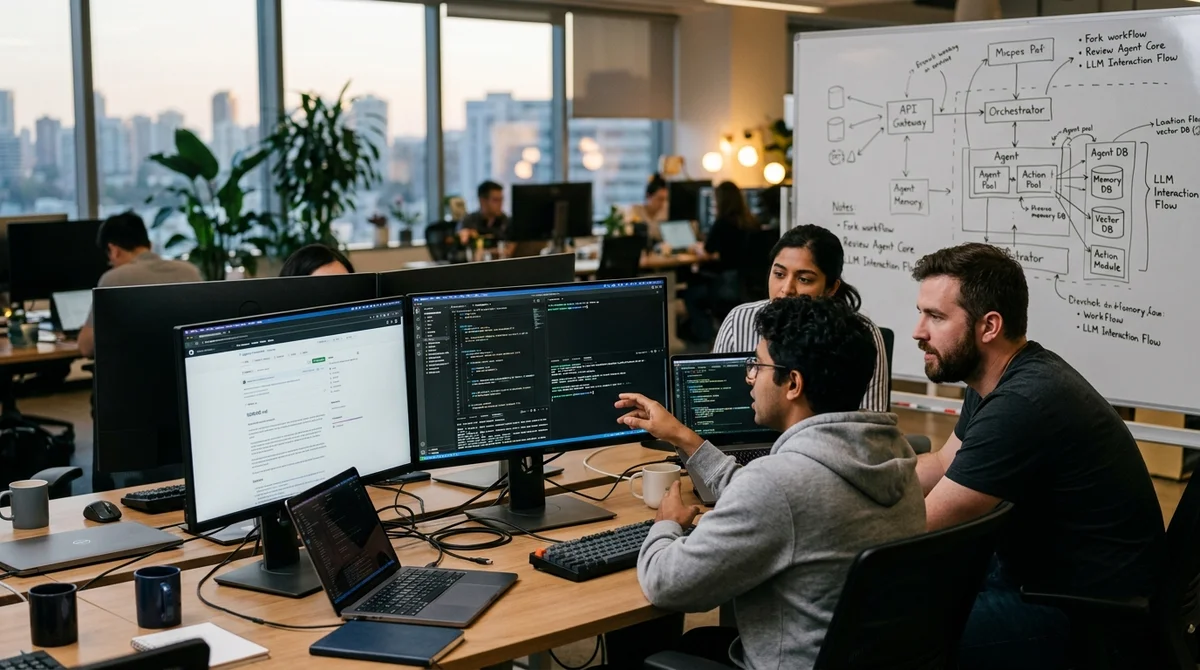
KDnuggets rounded up 10 open-source agent projects you can fork today
KDnuggets published a practical list of 10 open-source repositories for learning agent engineering — from coding agents and browser automation to memory and deep research.
KDnuggets named 10 GitHub repositories that help users master Claude Code more deeply
KDnuggets compiled 10 GitHub repositories that help users learn Claude Code through real workflows, templates, subagents, system prompts, and ready-made configurations.
AI startup advisor Salil Darji listed the mistakes founders notice too late
AI startup mentor Salil Darji says founders are held back by spreading themselves too thin, a cult of the pitch deck, and chasing hype — while those who stay focused and understand the economics come out ahead.

How to turn OpenAI Codex into a full AI agent for real-world development: 5 practices
OpenAI Codex can be significantly improved with simple setups: planning, an AGENTS.md file, custom skills, self-checks, and using CLI tools.
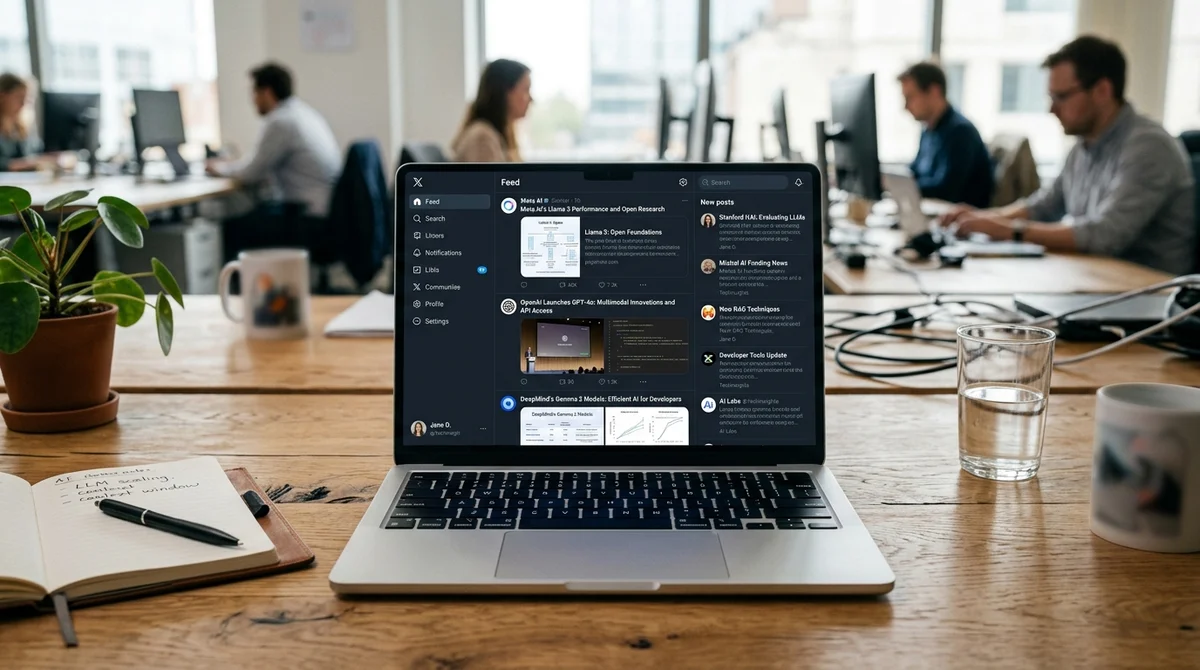
KDnuggets picked 10 X accounts to follow for LLM news
KDnuggets compiled 10 X accounts that help track LLM news without the noise: from Andrej Karpathy and Simon Willison to DAIR.AI, alphaXiv, and release feeds.

KDnuggets listed 5 Python decorators that make AI code cleaner and more reliable
KDnuggets collected five Python decorators that help keep AI code in order: limit concurrency, log steps, fix seed, and handle API failures.
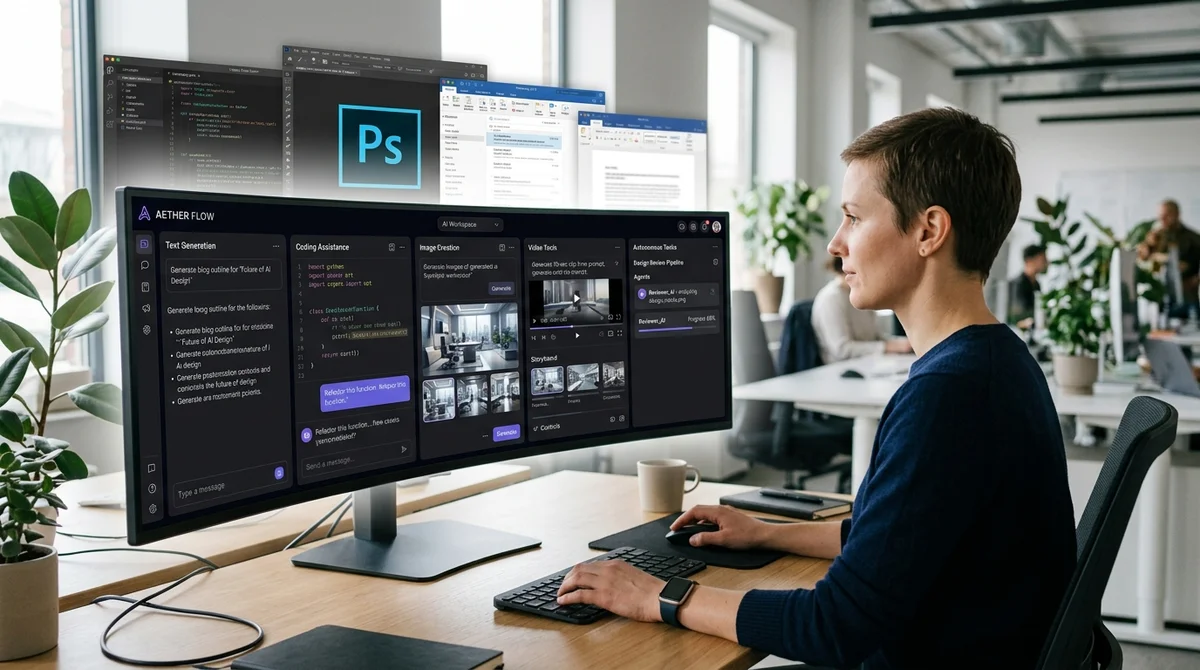
Abacus AI Pushes ChatLLM as One-Service Replacement for ChatGPT, Claude, and Midjourney
Abacus AI's ChatLLM combines text models, image generation, video, and agent scenarios in a single interface to reduce the number of subscriptions and switches between AI services.

Hugging Face showed how to build a weather AI agent on smolagents in 15 minutes
Hugging Face via the smolagents library shows how to build a weather AI agent in Python in 15 minutes: add a tool, connect an LLM, and let it autonomously fetch data.

Whisper and Faster-Whisper: How to Transcribe Audio Locally Without Sending Files to the Cloud
A step-by-step breakdown of local audio transcription via Faster-Whisper and Python: data stays out of the cloud, and operation is possible offline on both CPU and GPU.
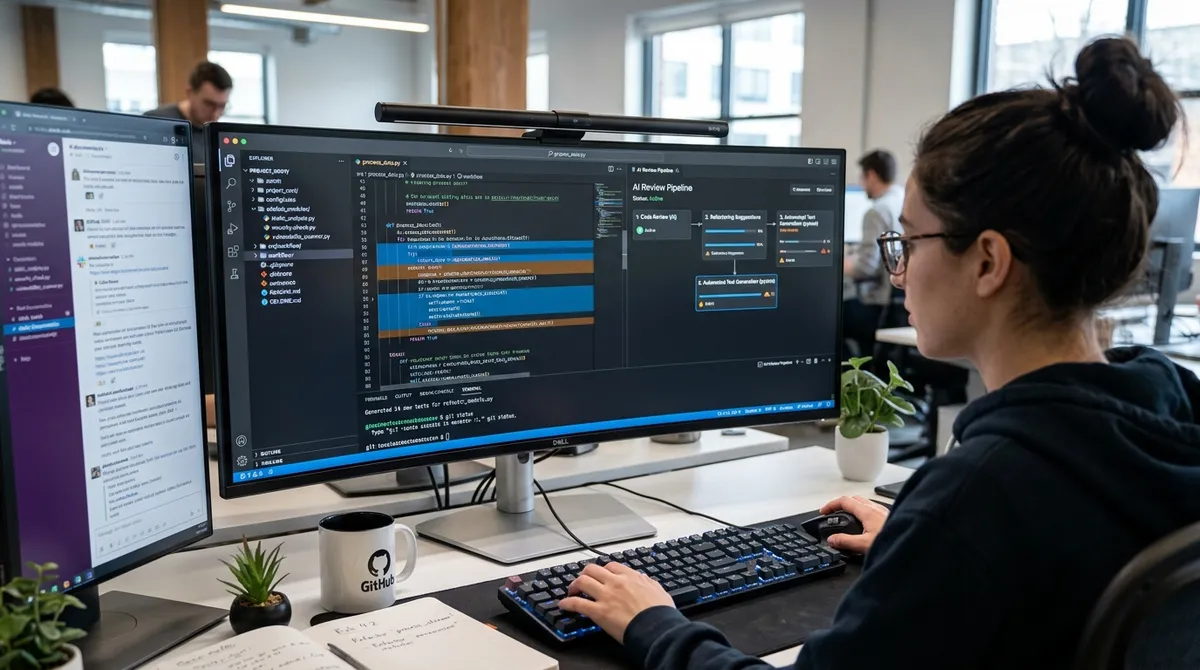
Google Antigravity: How to Connect Rules, Skills, and Workflows for Reliable AI Agents
Google Antigravity examined how to assemble a robust QA pipeline through rules, skills, and workflows: an agent checks Python code, refactors it, and prepares tests itself.
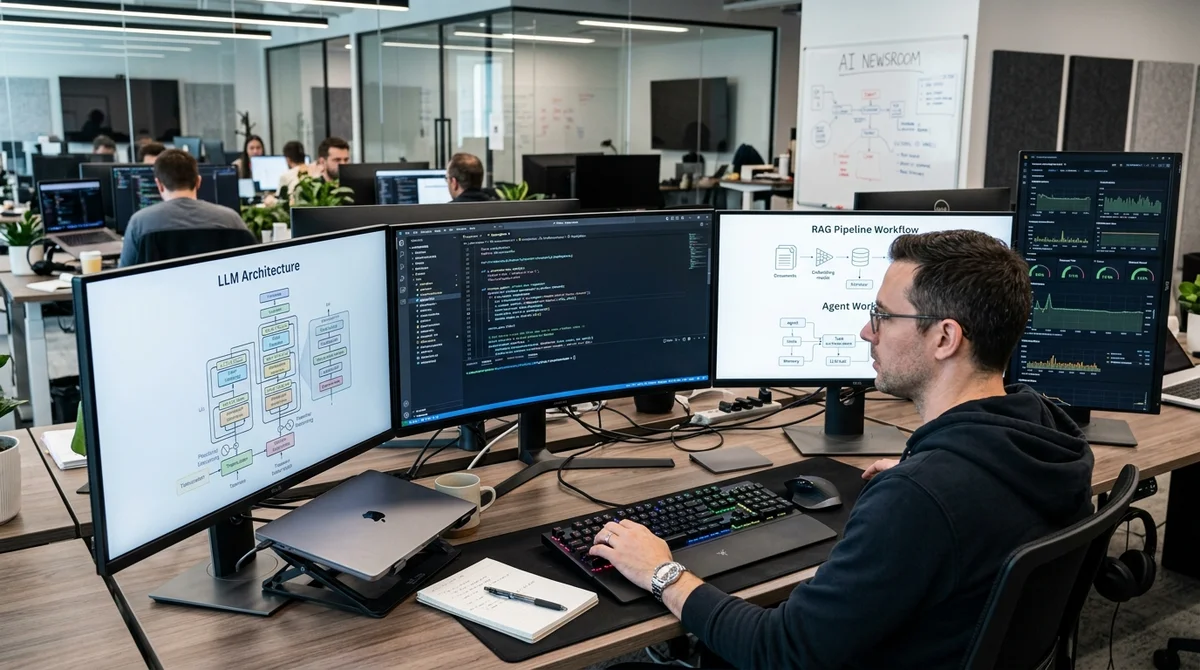
Python: 10 Libraries for Building LLM Applications — from RAG to Agentic Systems
A collection of 10 Python libraries shows which layers are used today to build LLM applications: models, RAG, agentic workflows, production serving, and quality evaluation.