LangChain Blog
AI news source. Articles are auto-selected and adapted by Hamidun News editors.
Latest publications

LangChain taught LangSmith to better align LLM-as-a-Judge verdicts with human preferences
LangChain detailed how self-tuning evaluators in LangSmith adapt LLM-as-a-Judge verdicts to match real human preferences through few-shot learning.

LangChain: AI agent swarms using LangGraph cut code debugging time by 93%
LangChain unveiled agentic engineering architecture: AI agent swarms with specialized roles built on LangGraph reduce code debugging time by 93% and accelerate collaborative development.

LangChain: claude-3.5-sonnet, gpt-4o, o1, and o3-mini Tested as ReAct Agents
LangChain tested claude-3.5-sonnet, gpt-4o, o1, and o3-mini as ReAct agents to learn how increased instruction and tool count impacts performance.

LangChain Compares GPT-4, Claude, and Open-Source LLMs in Data Extraction
LangChain published a benchmark comparing data extraction from chat logs: GPT-4, Claude models, and open-source LLMs evaluated on the same task set and metrics.

OpenWiki from LangChain: open documentation repository for AI agents
LangChain released open-source tool OpenWiki—it automatically generates code documentation so that code-based AI agents find needed context in the repository faster.

LangChain and NVIDIA Release NemoClaw Deep Agents Blueprint for Enterprise AI Agents
LangChain and NVIDIA presented the NemoClaw Deep Agents blueprint—a bundle of Deep Agents Code, Nemotron 3 Ultra model, and OpenShell for managed enterprise AI agents.

Nemotron 3 Ultra Reaches Claude Opus Level 8 Times Cheaper
LangChain showed that NVIDIA Nemotron 3 Ultra with optimized agent architecture can perform at Claude Opus 4.8 level, but 8 times cheaper.

NVIDIA NemoClaw: AI Agents with Deny-by-Default and Human Approval for Sensitive Code
LangChain and NVIDIA developed a controlled framework for managing AI agents when working with critical code requiring oversight.

OpenWiki Brains: proactive memory for AI agents from Gmail, Notion, and Git
LangChain introduced OpenWiki Brains, a system that turns Gmail, Notion, Git, and other sources into local wiki memory, allowing AI agents to work with up-to-date information without retraining.

LangChain: improving AI agents means mining data from their traces
LangChain described a methodology for iterative agent improvement through trace mining, training cheap judge models, and hill-climbing with automatic evals.

Schneider Electric Built Enterprise-Scale LLMOps Foundation with LangSmith
The industrial giant shared how it deployed LangSmith for observability, quality assessment, and controlled deployment of AI products across the company.

LangSmith Added End-to-End OpenTelemetry Support for LangChain and LangGraph
LangSmith fully integrated with OpenTelemetry: developers now see LLM calls and other services in a single trace without two parallel monitoring systems.

LangChain released Promptim, a library for automatic prompt optimization
LangChain launched the experimental library Promptim, which automates prompt engineering and helps AI teams adapt instructions faster when switching models.

New Computer Raised Agent Memory Search Accuracy by 50% with LangSmith
Startup New Computer leveraged the LangSmith observability tool to achieve a 50% increase in memory retrieval completeness, improving prompts through comparative testing.

LangChain Launches Headless Tools: Agents Work Directly in the Browser
LangChain released headless tools that enable AI agents to safely execute tasks on the client side — with access to browser APIs and local data without transmission to the server.

LangGraph gets fault tolerance: retries, timeouts, and error handlers for production agents
LangChain published a guide to LangGraph’s three fault-tolerance primitives — RetryPolicy, TimeoutPolicy, and error_handler — for building reliable production agents.

LangChain: why model neutrality protects businesses from vendor lock-in
LangChain warns: AI labs are building dependency not into the models, but into the tooling layer around agents — and only a neutral open-source framework protects businesses.

LangChain launched dynamic subagents in Deep Agents: orchestration via code
LangChain updated Deep Agents: AI agents now manage large-scale tasks through code, ensuring coverage and reliability for complex multistep pipelines.

LangChain: How Agent Loop Engineering Makes AI Agents Reliable
LangChain explains why an AI agent's reliability depends not on the model but on the 'loop' architecture — and how to design nested loops using LangGraph.

Factory AI doubled iteration speed with LangSmith by LangChain
Factory AI automated the feedback loop for AI coding agents with LangSmith by LangChain and doubled product iteration speed.

LangChain explained why Fleet combines a general-purpose chat and specialized agents
LangChain outlined how Fleet covers two delegation scenarios: a general-purpose chat for quick one-off tasks and specialized agents for the team's recurring workflows.

How to build team knowledge and judgment into the AI agent improvement loop — LangChain
LangChain explains why AI agents perform better when they reflect a team's expertise — and how to turn employees' tacit knowledge into training signals for the agent.

LangSmith learns to compare fine-tuned open-source LLMs with automatic scoring
LangChain has described how to test multiple fine-tuned open-source models in LangSmith: parallel runs, an LLM-judge, and comparative reports in a single interface.

LangChain Prompt Caching: Deep Agents Cut LLM Costs Up to 80%
Deep Agents in LangChain automatically caches repeated parts of the prompt and cuts token costs by up to 80% across all major providers — with no additional setup.

LangChain updated LangSmith: on-call copilot for alert triage, voice debugging, and Deep Agents Rubrics
LangChain released its June digest: LangSmith got an on-call copilot for alert triage, support for computer use, voice-based trace debugging, and a new agent evaluation system, Deep Agents Rubrics.

LangSmith and LangChain OSS: how to comply with EU AI Act requirements by August 2026
LangChain explained how LangSmith and open-source tools address key requirements of the European AI regulation ahead of the August 2, 2026 deadline.

Sierra: why the best customer-facing AI agents run on simple architectures
Sierra's Zak Reno-Wedin explained on the LangChain podcast why simple AI agent architectures are more reliable than complex ones and how "org chart shipping" kills the customer experience.

Box AI Built an Agent for Corporate Content on LangChain's Deep Agents
Box migrated its corporate AI platform to the Deep Agents architecture from LangChain: the agent searches, analyzes, and synthesizes thousands of documents while preserving access rights and flexibility in AI model selec

LangChain Introduced Interpreter Skills to Expand Agent Capabilities
LangChain has added a new way to expand AI agents through Interpreter Skills—TypeScript modules that agents can import and execute to solve complex tasks.
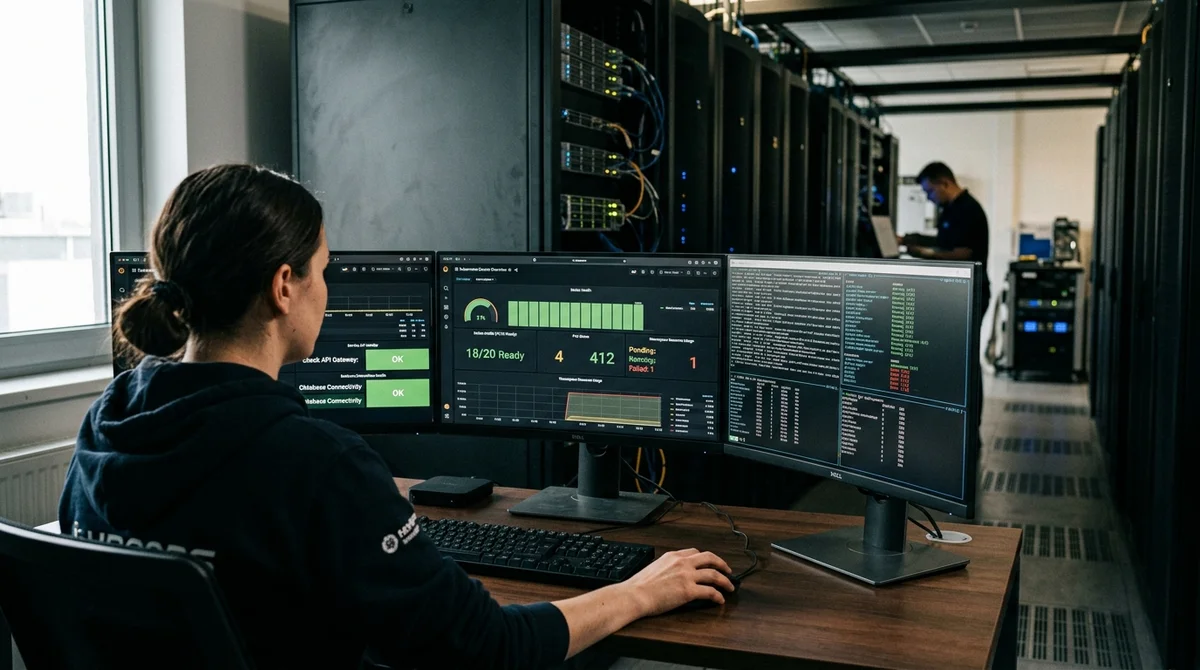
LangChain Releases Mission Control for Managing LangSmith on Kubernetes
LangChain introduced Mission Control, a tool for operational management of self-hosted LangSmith. It helps with cluster configuration, health checks, releases, and diagnostics on Kubernetes.