Waymo plans 1 million weekly rides by 2026
Waymo, Alphabet Inc.’s self-driving car unit, aims to reach 1 million paid weekly rides on its robotaxis in the US by the end of 2026. This was stated by the company’s co-CEO, Tekedra Mawakana. The ambitious plan underscores Waymo’s confidence in scaling its operations and further integrating autonomous driving technology into everyday life.
AI-processed from Bloomberg Tech; edited by Hamidun News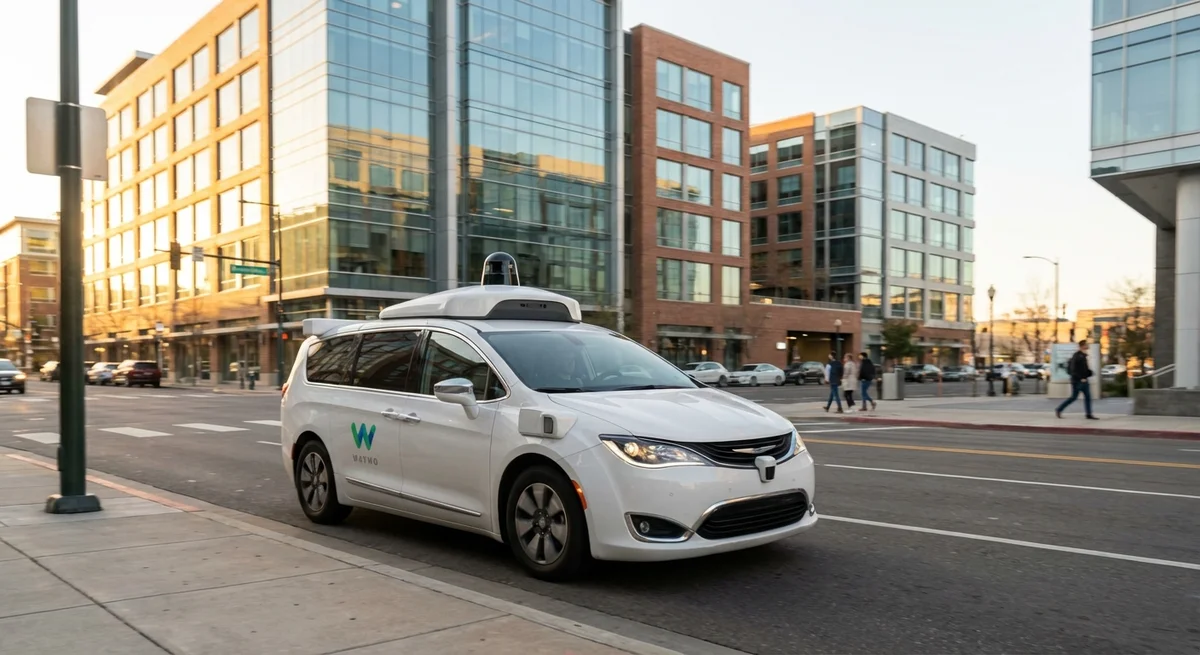
# Waymo sets itself a goal of one million trips per week — and plans to achieve it in two years
Waymo, a division of Alphabet, has announced an ambitious goal: by the end of 2026, the company's autonomous taxis should complete more than one million paid rides per week across the United States. This was announced by Waymo's co-president Tekedra Mawakana, sending a powerful signal to investors and competitors that autonomous driving is ceasing to be futurism and is becoming a scalable business. The figure of one million weekly rides is not just a statistic. It means that autonomous vehicles will begin to displace traditional taxis in American cities fast enough and competitively.
To put the scale in perspective: today Waymo already operates in several cities, including San Francisco, Phoenix, Los Angeles, and recently Seattle. The company is gradually removing restrictions on operating hours and expanding its geography. But the path from the current level to one million weekly rides requires not only technological progress but also solving administrative, logistical, and competitive challenges. Waymo understands this, yet demonstrates rare confidence for the autonomous vehicle industry — based on real experience working with passengers and accumulated safety data.
Waymo's own history is impressive. The company launched in 2009 as a Google project, spent more than a decade developing the technology and testing. Unlike many competitors who promised earlier and delivered later, Waymo stayed quiet for a long time and expanded slowly but methodically. This conservative approach is working. Passengers in cities where Waymo operates actively use the service — the company cites data on high satisfaction and growing demand. Against the backdrop of bankruptcies of other autonomous taxi players, this position looks particularly convincing.
Achieving the target will require acceleration on multiple fronts simultaneously. First, the number of vehicles in operation needs to be sharply increased — not by dozens, but by thousands of units. Second, the company needs to expand into new cities and accelerate regulatory approval, which remains a bottleneck for autonomous driving in the USA. Third, it needs to optimize operating costs: today, transporting one passenger using an autonomous taxi costs significantly more than traditional Uber or Lyft. Only by achieving economic parity or better can Waymo attract mass demand.
Waymo's goal is not just ambitious — it is causing market disruption. If the company achieves it, it means that the share of autonomous rides in the overall volume of urban transportation will become a significant figure, not a marginal phenomenon. This will have consequences for professional drivers, insurers, traditional car manufacturers, and cities' infrastructure projects. Competitors — Tesla with its Full Self-Driving, Cruise (despite current problems), Uber Advanced Technologies Group, and Chinese players like Baidu and Didi — are watching Waymo's progress closely.
The announced goal requires unwavering funding and flawless safety. One serious accident, and public trust in autonomous driving could collapse. Waymo is aware of this vulnerability and acts accordingly. By 2026, it will become clear whether the optimism was justified or was merely a marketing move. But it is already clear today: autonomous taxis have stopped being an experiment and have become a real business with real goals.
Need AI working inside your business — not just in your newsfeed?
I build production AI for companies — custom CRM, internal tools, autonomous agents, workflow automation. Owned by you, shaped to your process, no per-seat tax. Built by Zhemal Khamidun, CPO of AlpinaGPT (AI platform, 6,000+ users).
The AI world, distilled — once a week
Seven stories that actually mattered, hand-picked. No noise, no reposts, no press releases.
Done! Check your inbox for a confirmation.