MarkTechPost
AI news source. Articles are auto-selected and adapted by Hamidun News editors.
Latest publications

Vector Database Comparison in 2026: Nine Systems by Cost, Scale, and Architecture
Nine leading vector databases are now key infrastructure for RAG and agential AI. A review of architecture, cost, and scalability helps choose the right system for the task.

Vercel Labs introduces Zero — a language for AI agents to write, fix, and ship code
Vercel released Zero — a programming language where the compiler outputs JSON instead of text so AI agents can independently write, fix, and deploy native programs

How Memori creates persistent memory for agents and multi-session LLMs
Memori is a memory infrastructure for LLM applications that lets agents retain context across sessions and work with multiple users at the same time.

SHAP for machine learning: comparing explainers and a practical guide
A new guide shows how to choose between four SHAP methods for interpreting models — from the fast Tree to the versatile Kernel.

DeepMind built a Gemini-powered AI mouse so users don't switch to chats
Google DeepMind unveiled a Gemini-based AI mouse that analyzes the context around the cursor and lets users issue voice commands without opening a separate window.

Mira Murati unveiled the first system for natural real-time dialogue with AI
Thinking Machines Lab introduced TML-Interaction-Small, a model that listens and responds at the same time, processing speech, video, and text without delays — for the first time, AI can converse like a human.

Nous Research introduced Lighthouse Attention to accelerate LLM training
Nous Research published a new attention mechanism, Lighthouse Attention, which speeds up large language model training by 1.4–1.7x when handling long contexts.

GLiGuard by Fastino Labs: a safety model 16x faster than larger competitors
Fastino Labs released the open GLiGuard model for LLM safety checks: just 300M parameters, yet more accurate than models 90 times larger.

Shadow AI in 63% of companies: how tools outpaced corporate policies
Most companies still lack formal AI governance policies, while employees are already actively adopting tools on their own — creating serious security risks.
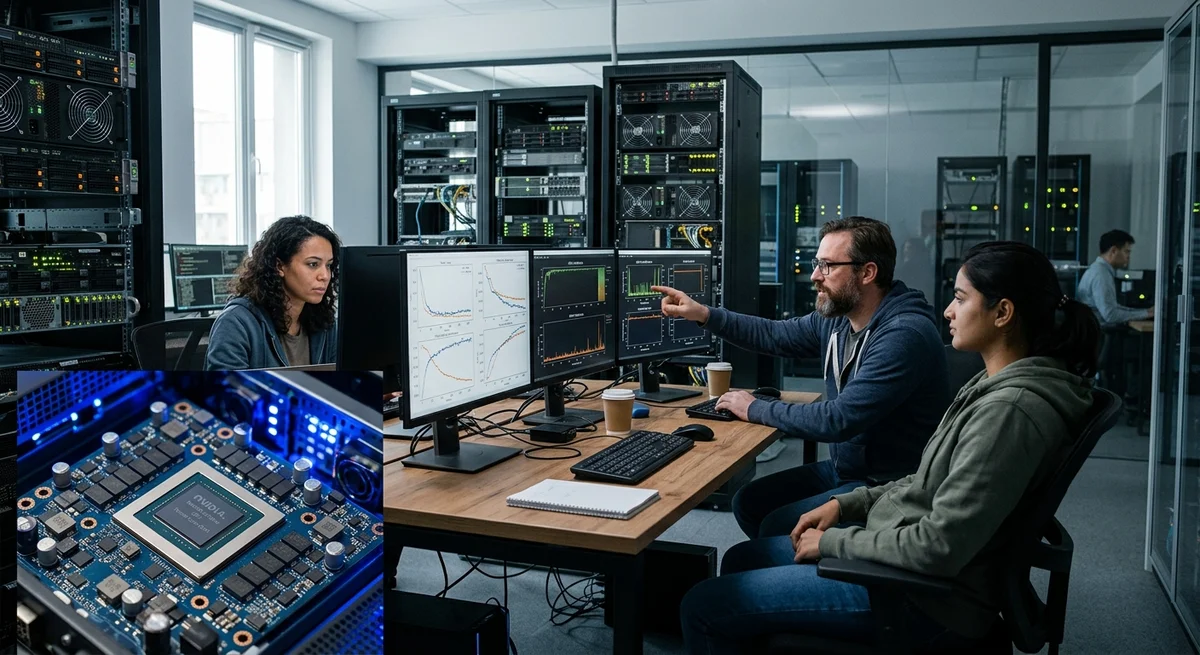
Nous Research sped up LLM pretraining 2.5x without changing the architecture
Nous Research developed Token Superposition Training, a method that cuts language model pretraining time by 2.5x without changing the architecture or inference behavior.
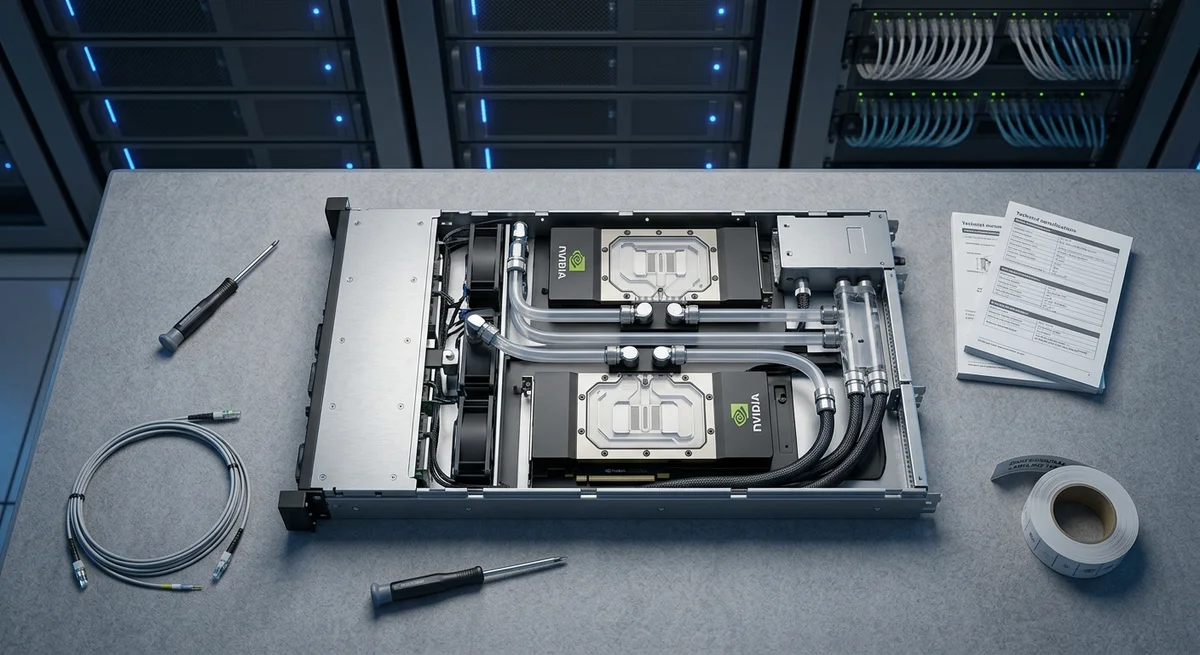
Zyphra released the first MoE diffusion model with a 7.7x speedup
Zyphra introduced ZAYA1-8B-Diffusion-Preview, the first MoE diffusion model converted from an LLM. Inference became 7.7x faster by shifting computation from memory to the GPU processor.

How to build an MCP-style system for intelligent AI agents
A complete guide to building an AI agent system that opens the right tools on its own, routes tasks, and executes them step by step.
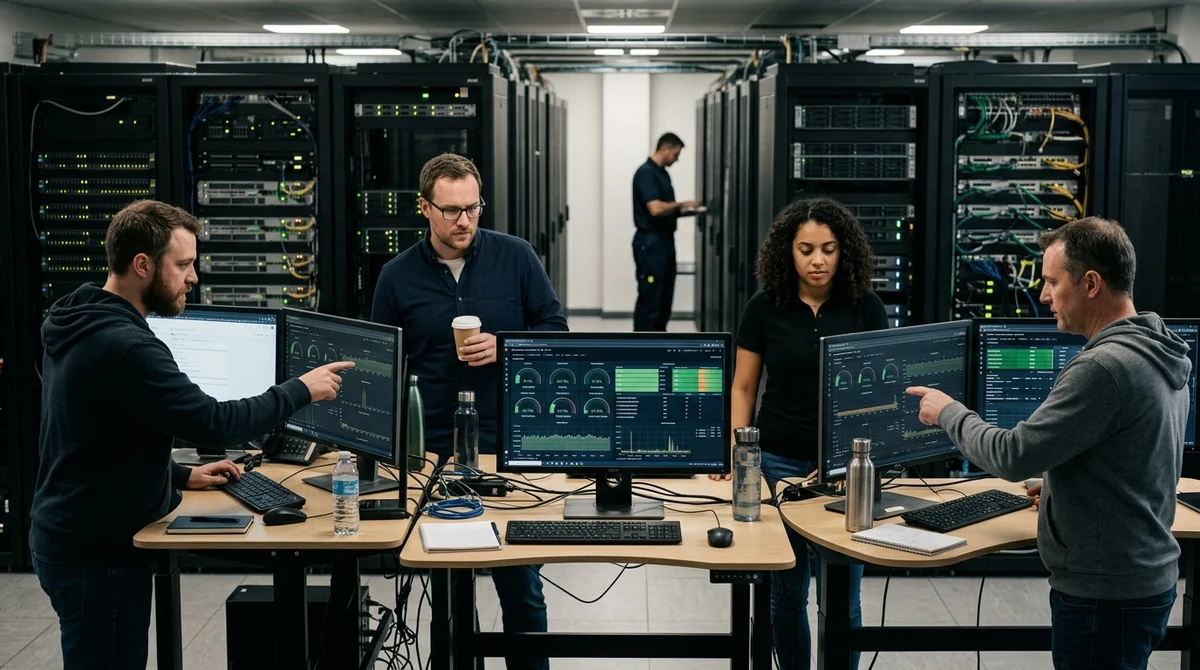
BerriAI released LiteLLM Agent Platform for agents in production
Running an AI agent in a local script is simple. Running it reliably in production, synchronizing between restarts, providing isolated environments for different contexts—that's a completely…

Repowise for repository analysis: graph analysis and dead code
Repowise helps developers analyze code repositories at the whole-project level: building dependency graphs, finding dead code, and providing context for AI.

NVIDIA unveils SANA-WM: a model for 60-second 720p videos on a single GPU
NVIDIA has introduced SANA-WM, an open world model that generates 60-second 720p videos with precise camera control on a single GPU.

How to Build a Streaming Decision-Making Agent with Online Replanning in a Dynamic Environment
A detailed tutorial on building a streaming decision-making agent that adapts to moving obstacles and changing goals in real time.

Outlines and Pydantic: how to build type-safe LLM pipelines with strict schemas
A new guide to Outlines and Pydantic shows how to assemble LLM pipelines with a strict schema, data types, JSON recovery, and validated function calls.

Volcengine releases OpenViking — a file-based context store for AI agents like OpenClaw
OpenViking from Volcengine stores an AI agent's memory, resources, and skills as a file system to simplify context retrieval, reduce token usage, and make RAG navigation observable.

Diffrax and JAX: a practical guide to ODEs, stochastic simulations, and neural ODE
A new Diffrax and JAX walkthrough covers the full path from setting up the computational environment and adaptive ODE solvers to stochastic simulations, vmap batching, and training a neural ODE.

BM25 vs. RAG: why keyword search and semantic search return different answers
The analysis shows how BM25 ranks documents by word frequency and rarity, while RAG with embeddings searches by meaning, which is why the two approaches are increasingly combined in production.

Meta released Tribe v2 — a model that predicts the brain's response to video, audio, and text
Meta has open-sourced Tribe v2, a model that predicts the brain's fMRI response from video, audio, and text and gives neurobiologists a tool for virtual experiments without new scans.

Google ADK showcases a multi-agent pipeline for data analysis, charts, and reports in Python
A new guide shows how to build a multi-agent system on Google ADK for loading tables, running statistical tests, visualization, and automatic report generation in Python.

Google enables Gemini API to combine Search, Maps, and custom functions in a single request
Google has updated the Gemini API: a single call can now combine Google Search, Google Maps, and custom functions, making it possible to build multi-step agent workflows without manual glue code.

OpenClaw: how to build a local, secure runtime for AI agents without using the cloud
A new OpenClaw guide shows how to set up a local-first runtime for an AI agent: a gateway on loopback, model access via environment variables, controlled exec, and deterministic skills.
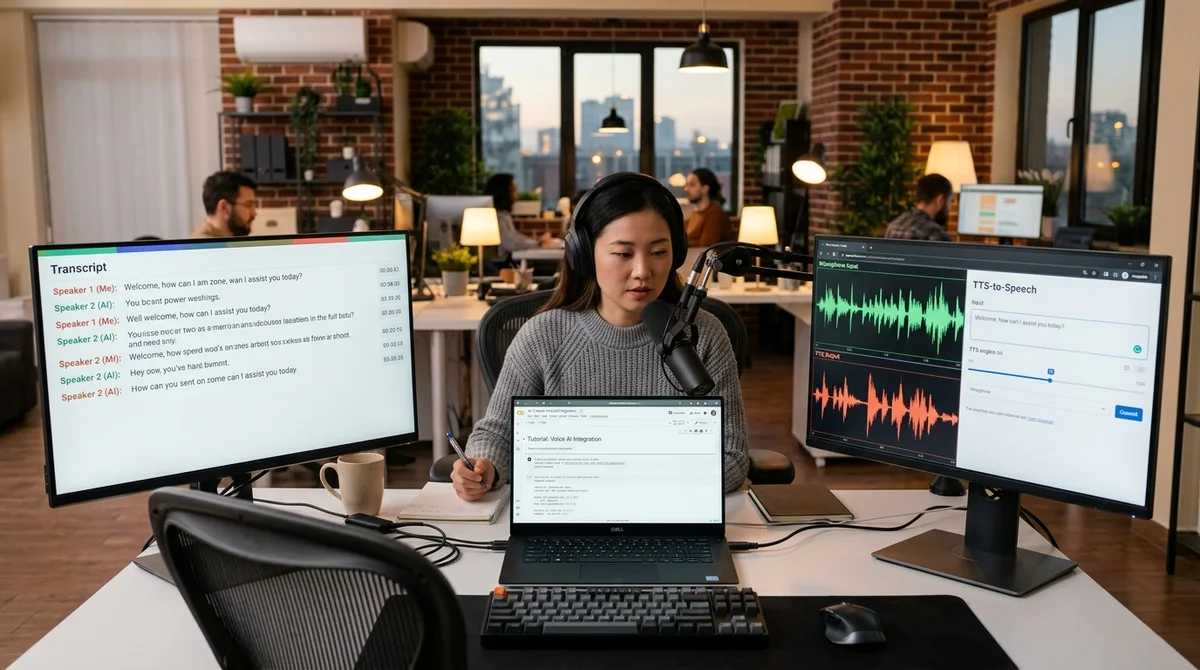
Microsoft showed how to run VibeVoice for ASR, realtime TTS, and speech-to-speech
Microsoft released a practical Colab guide to VibeVoice: it walks through speaker-aware ASR, realtime TTS, batch audio processing, and building a speech-to-speech pipeline step by step.
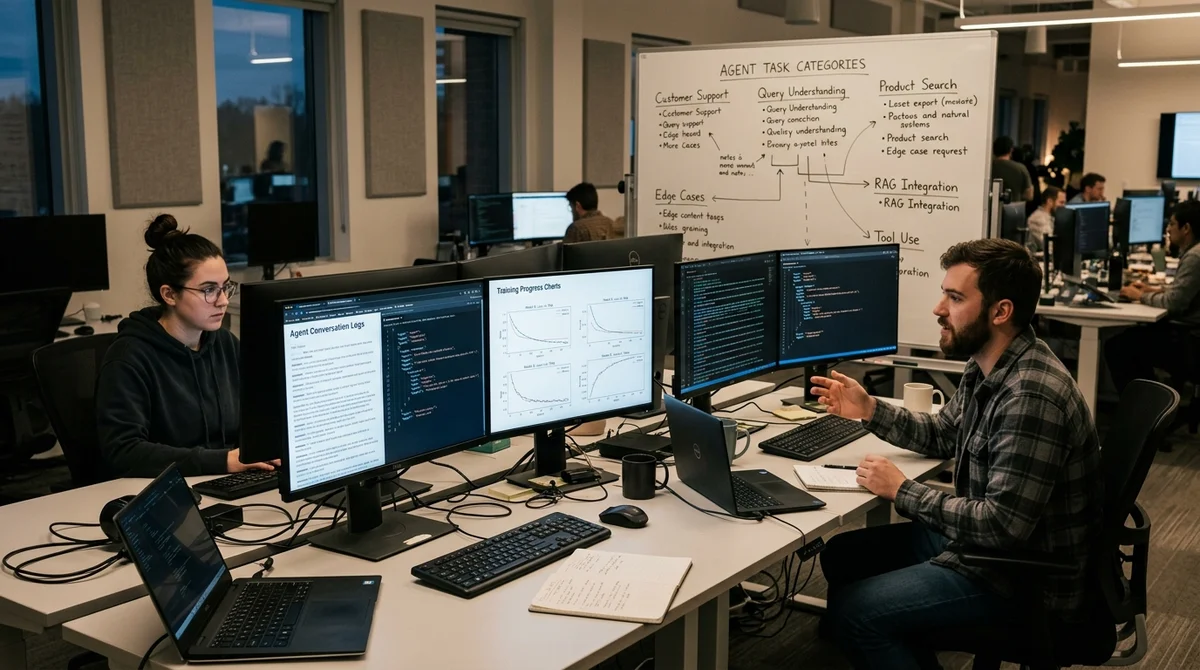
Hugging Face and Lambda: how to parse and fine-tune agent reasoning traces
MarkTechPost published a practical guide to the lambda/hermes-agent-reasoning-traces dataset: how to parse agent thoughts, tool calls, create charts, and prepare data for fine-tuning.
Alibaba releases Qwen3.6-35B-A3B — a multimodal MoE model focused on agentic coding
Qwen has released the weights for Qwen3.6-35B-A3B: with 35 billion parameters and 3 billion active, the model works with code, images, and video, with an emphasis on tool use, long context, and agentic scenarios.

Microsoft, NVIDIA, and IBM made the list of the 19 leading AI red teaming tools of 2026
A new AI red teaming roundup brings together 19 tools — from Microsoft PyRIT and NVIDIA Garak to IBM AIF360 — to find data leaks, jailbreak attacks, and model bias before production release.

Meta introduced Autodata — an agentic system for creating high-quality training data
Meta introduced Autodata — a framework in which LLM agents collect, verify, and improve training data themselves so that more capable models learn from more complex and precise examples.

NeuralSet and deep learning: decoding linguistic features from MEG brain signals
A new breakdown from NeuralSet shows how to turn raw MEG signals into a model that predicts linguistic features, including word length, directly from brain activity.