MarkTechPost
AI news source. Articles are auto-selected and adapted by Hamidun News editors.
Latest publications

OpenAI Presented GPT-Rosalind — an AI Model for Biology, Genomics, and Drug Development
OpenAI launched GPT-Rosalind — a specialized model for biology and pharmaceuticals that helps accelerate drug development, genomic data analysis, and experiment planning.

Google Presented Auto-Diagnose — an AI System for Finding Causes of Integration Test Failures
Google presented Auto-Diagnose — a system based on Gemini 2.5 Flash that automatically analyzes logs from failed integration tests and identifies the root cause of failures with 90.14% accuracy.

OpenAI GPT-OSS: Launching Open-Weight Models in Colab with MXFP4 and Advanced Inference
A new guide explains how to launch openai/gpt-oss-20b in Google Colab: install dependencies for Transformers, check GPU, enable MXFP4 quantization, and build a working inference pipeline.

Anthropic releases Claude Opus 4.7 for agentic programming, vision, and autonomous tasks
Anthropic introduced Claude Opus 4.7 — an update to its flagship model with notable improvements in agentic coding, detailed image analysis, and long autonomous tasks.

PrismML Bonsai: How to Run a 1-Bit Model on CUDA with GGUF, JSON and RAG
In a new PrismML Bonsai tutorial, we covered how to run Bonsai-1.7B on GPU via CUDA and GGUF, measure throughput, configure chat, strict JSON output, and a basic RAG scenario.

xAI launches separate Grok APIs for speech recognition and synthesis for corporate developers
xAI has split Grok's voice stack into standalone APIs: Speech-to-Text and Text-to-Speech for business with aggressive pricing, multilingual support, and focus on the voice applications market.

NVIDIA released Ising — the first open family of AI models for quantum-classical systems
NVIDIA presented Ising — an open family of AI models for quantum processor calibration and error correction to bring useful hybrid quantum-classical systems closer to reality.

Why LoRA Breaks in Production and How RS-LoRA Saves Model Fine-tuning
LoRA excels at style and format, but loses signal when fine-tuning with new facts; RS-LoRA solves the problem by changing the scaling formula to a more stable one.

OpenKB and OpenRouter show how to build a local AI knowledge base with Llama search
A new tutorial explains how to deploy a local knowledge base on OpenKB, connect an open model via OpenRouter, and safely configure search without hardcoding keys.

OpenAI and Magika showed how to build a pipeline for file recognition and threat analysis
The guide demonstrates a practical pipeline where Magika determines the actual file type from bytes, and OpenAI helps interpret the result and identify potential risks.
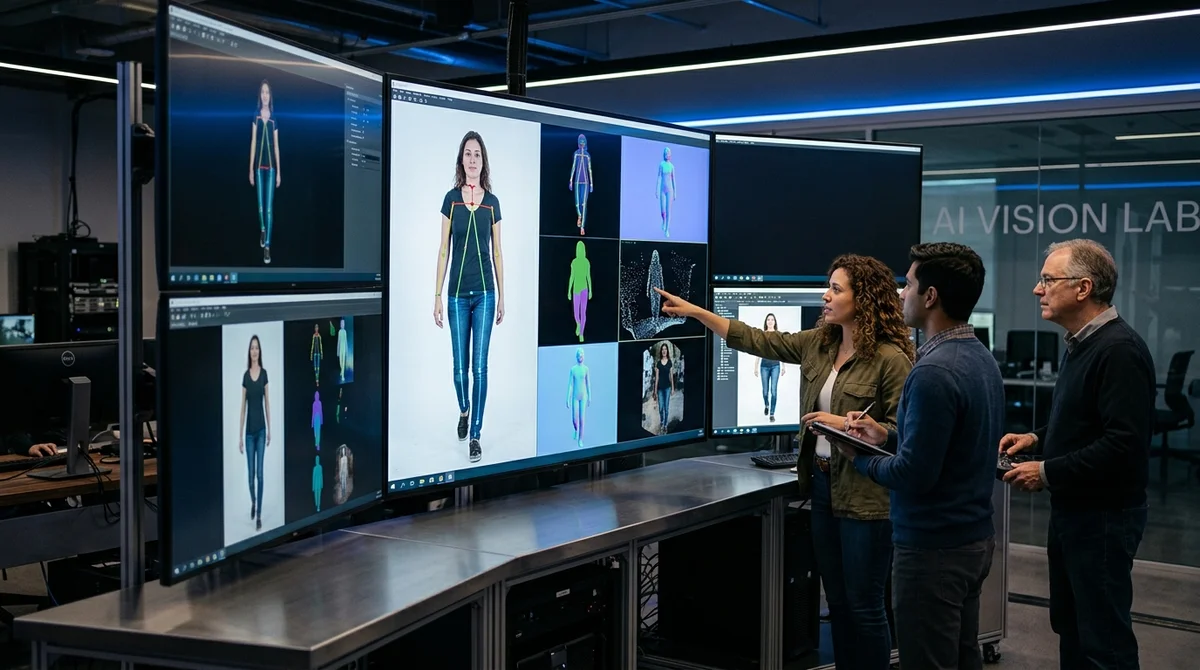
Meta introduced Sapiens2 — a unified computer vision model for pose, segmentation, and 3D
Meta Reality Labs released Sapiens2 — a family of vision models for human analysis that solves pose, segmentation, surface geometry, and 3D mapping from a single architecture.

OpenMOSS releases MOSS-Audio — an open audio model that outperforms larger alternatives
OpenMOSS introduced MOSS-Audio — an open model that understands speech, music, and ambient sounds in a single architecture and outperforms significantly larger open-source models on common audio benchmarks.

OpenAI Embeddings and RL: How to Build an Agent with Long-Term Memory for Accurate Answers
The tutorial shows how to train an RL agent to select relevant records from long-term memory so that an LLM answers questions about saved facts more accurately.

How to Measure Real Intelligence: Key Benchmarks for AI Agents
Classical tests no longer reflect the real capabilities of neural networks. We explore which benchmarks truly show whether an AI agent is ready for real-world business applications.

Elastic Memory for AI: How kvcached Solves the GPU Shortage
Dynamic KV-cache distribution promises to radically reduce the cost of hosting language models by enabling efficient memory sharing across a single GPU.

xAI's Voice Model Surpasses GPT Realtime in Business Tasks
Elon Musk's xAI has unveiled grok-voice-think-fast-1.0. The new model outperformed solutions from OpenAI and Google in managing complex business workflows.

GitNexus: How a New Tool Taught AI Agents Structural Code Understanding
AI assistants excel at writing local code but often fail to grasp the global architecture of projects. The open-source GitNexus project solves this problem using knowledge graphs and the MCP protocol.

DeepSeek-V4: How New Compression Algorithms Made One-Million-Token Context a Reality
DeepSeek introduced the fourth generation of its models. Through radical attention compression, processing massive data volumes is becoming accessible not just to tech giants.

Decoupled DiLoCo Architecture from DeepMind Solves AI Scaling Problem
Training advanced AI models has always been held hostage by hardware failures: one chip breaking would stop the entire cluster. A new architecture from Google DeepMind changes the rules of the game.
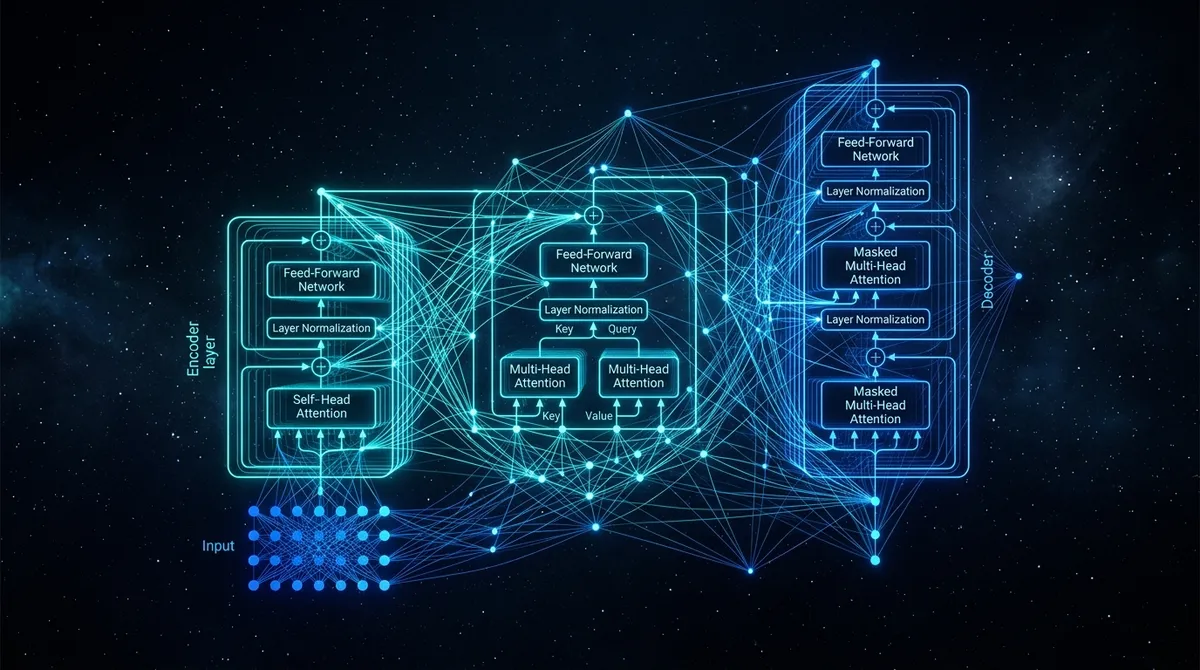
OpenMythos: Open-source PyTorch reconstruction of Claude Mythos architecture with 770M parameters
Developer Kye Gomez reconstructed the presumed Claude Mythos architecture from Anthropic from scratch — without leaks, based only on public research.

OpenAI Scales GPT-5.4-Cyber for Verified Cybersecurity Professionals
OpenAI opens broad access to GPT-5.4-Cyber — a fine-tuned version of GPT-5.4 without standard restrictions for thousands of verified defenders.

Moonshot AI releases Kimi K2.6: an agentic model with a swarm of 300 sub-agents
Chinese lab Moonshot AI has open-sourced Kimi K2.6, a multimodal agentic model that autonomously coordinates up to 300 sub-agents and 4,000 steps.

Microsoft Phi-4-Mini: implementing quantization, RAG, and LoRA in a single Jupyter notebook
The tutorial shows the full Phi-4-mini-instruct pipeline: 4-bit quantization, streaming generation, reasoning, tool calling, RAG, and LoRA fine-tuning in one notebook.

Qwen 3.6-35B-A3B in practice: multimodality, MoE, and RAG in a single pipeline
A detailed breakdown of implementing Qwen 3.6-35B-A3B, from model loading to RAG, tool calling, and session persistence in practical workflows.

NVIDIA introduced Nemotron 3 Super — an open model with 120 billion parameters
The new hybrid model combines Mamba and Attention architectures with a Mixture-of-Experts approach, delivering a fivefold performance gain for multi-agent systems. The gap between proprietary and open models is rapidly n

Google introduced TensorFlow 2.21 and LiteRT for mobile AI
Google introduced TensorFlow 2.21 and LiteRT, a new standard for running neural networks on smartphones with NPU support and GPU acceleration for mobile platforms.

Google launches Android Bench to evaluate AI in mobile development
Google has made Android Bench available, the first specialized tool for assessing large language models' skills in Android app development.

OpenAI unveils Codex Security for automated detection and remediation of code vulnerabilities
OpenAI is launching Codex Security, an intelligent agent for code security analysis that not only finds issues, but also suggests ready-made patches to fix them.

Liquid AI released a system for running AI agents fully on-device
Liquid AI unveiled the LFM2-24B-A2B model and the LocalCowork app — a pairing for executing complex AI agent workflows without a single call to the cloud. Privacy is becoming an architectural principle.

Yuan 3.0 Ultra: one trillion parameters with record efficiency
China's YuanLab AI has unveiled an open multimodal model with one trillion parameters, while activating only 68.8 billion of them. A one-third reduction in parameters alongside a 49% increase in training efficiency — how